Choosing the right lithium battery chemistry is one of the most important decisions when building a battery system.
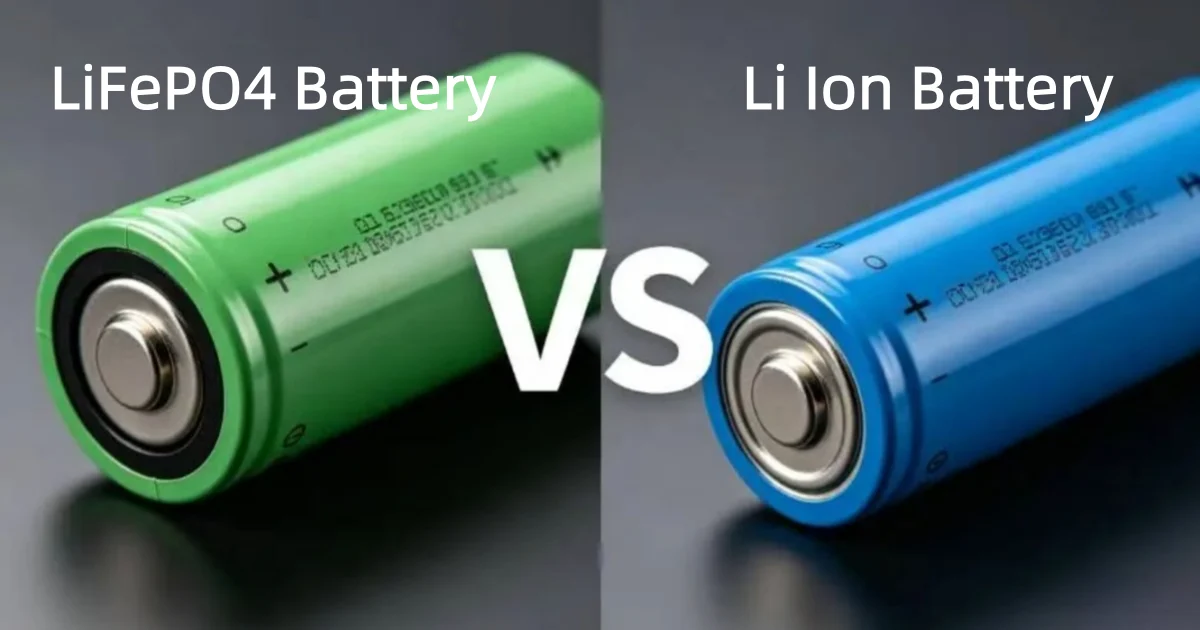
Many users ask: Should I choose LiFePO4 or lithium-ion battery? The answer depends on the application.
LiFePO4 batteries focus on:
- Long lifespan
- High safety
- Better thermal stability
- Lower cost
Lithium-ion batteries focus on:
- Higher energy density
- Smaller size
- Lighter weight
- Better low-temperature performance
There is no battery chemistry that is perfect for every application. The right choice depends on your priorities.
LiFePO4 vs Lithium-ion: Key Differences
The simplest way to understand the difference:
Lithium-ion battery: Higher energy density, smaller size, better weight advantage, but shorter cycle life and requires stricter protection.
LiFePO4 battery: Longer lifespan, safer, more affordable, and more stable, but larger and heavier at the same capacity.
LiFePO4 Battery: The Preferred Choice for Energy Storage
LiFePO4 (Lithium Iron Phosphate) batteries are widely used in applications where safety and long service life are the priority.
Advantages of LiFePO4 Battery
Long Cycle Life
LiFePO4 batteries typically provide:
- 3000+ cycles under proper conditions
- Long service life for daily cycling applications
This makes them ideal for systems that require frequent charging and discharging.
Excellent Safety Performance
LiFePO4 chemistry has better thermal stability compared with many other lithium battery chemistries.
Advantages include:
- Better high-temperature resistance
- Lower risk of thermal runaway
- More stable operation
This makes LiFePO4 a popular choice for home energy storage, RV power systems, and outdoor applications.
Better Cost Performance
LiFePO4 batteries usually provide excellent cost performance because of:
- Long lifespan
- Stable performance
- Lower replacement frequency
Disadvantages of LiFePO4 Battery
The main disadvantages are:
- Lower energy density
- Larger size and weight at the same capacity
- Reduced performance in very cold temperatures
Common Applications
LiFePO4 batteries are commonly used in:
- Solar energy storage systems
- RV battery systems
- Portable power stations
- Camping power solutions
- Home backup power
- Off-grid energy systems
Lithium-ion Battery: The Choice for Lightweight Applications
Lithium-ion batteries provide higher energy density and are widely used where size and weight are important.
Advantages of Lithium-ion Battery
Higher Energy Density
Compared with LiFePO4 batteries, lithium-ion batteries can store more energy in a smaller and lighter package.
This makes them suitable for:
- Portable devices
- Compact battery packs
- Space-limited applications
Better Low-temperature Performance
Lithium-ion batteries generally perform better in cold environments compared with LiFePO4 batteries.
They are often preferred for applications requiring operation in lower temperatures.
Disadvantages of Lithium-ion Battery
Compared with LiFePO4 batteries:
- Shorter cycle life
- Higher sensitivity to temperature
- Requires more careful battery management
- Higher cost for some applications
Typical cycle life:
| Battery Type | Typical Cycle Life |
|---|---|
| LiFePO4 | 3000+ cycles |
| Lithium-ion | 1000-1500 cycles |
Which Battery Should You Choose?
| Application | Recommended Battery |
|---|---|
| Home energy storage | LiFePO4 |
| Solar energy storage | LiFePO4 |
| RV battery system | LiFePO4 |
| Camping power station | LiFePO4 |
| Long-term outdoor use | LiFePO4 |
| Small portable devices | Lithium-ion |
| Space-limited battery packs | Lithium-ion |
| Cold environment applications | Lithium-ion |
Simple Selection Guide
Choose LiFePO4 If You Need:
- Long service life
- High safety
- Lower operating cost
- Frequent charge and discharge cycles
- Energy storage applications
Choose Lithium-ion If You Need:
- Smaller size
- Lower weight
- Higher energy density
- Better cold-weather performance
Common Mistakes When Choosing Lithium Batteries
Many people assume that higher energy density always means a better battery.
However, energy storage applications usually focus more on:
- Safety
- Lifespan
- Reliability
- Total cost of ownership
A lighter battery is not always the better choice.
For home energy storage, RV systems, and outdoor power applications, LiFePO4 is often the more practical option because of its long lifespan and excellent safety characteristics.
Conclusion
Both LiFePO4 and lithium-ion batteries have their own advantages.
For energy storage, RV, camping, and long-term outdoor applications, LiFePO4 is usually the preferred choice.
For lightweight devices and space-limited applications, lithium-ion batteries are often more suitable.
The best battery chemistry depends on your application requirements, including capacity, size, temperature environment, cycle requirements, and safety expectations.
LNC Battery provides customized lithium battery solutions, including LiFePO4 battery packs, lithium-ion battery packs, BMS integration, and OEM/ODM battery design for different applications.