IFR26700-4000 3.2V 4000mAh LiFePO4 Battery Cell
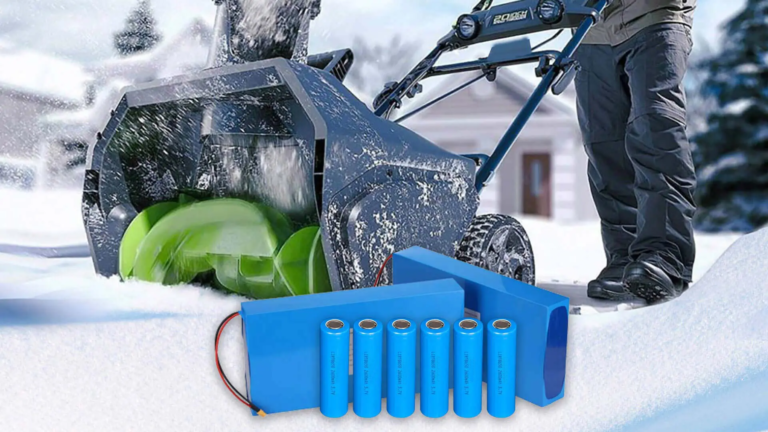
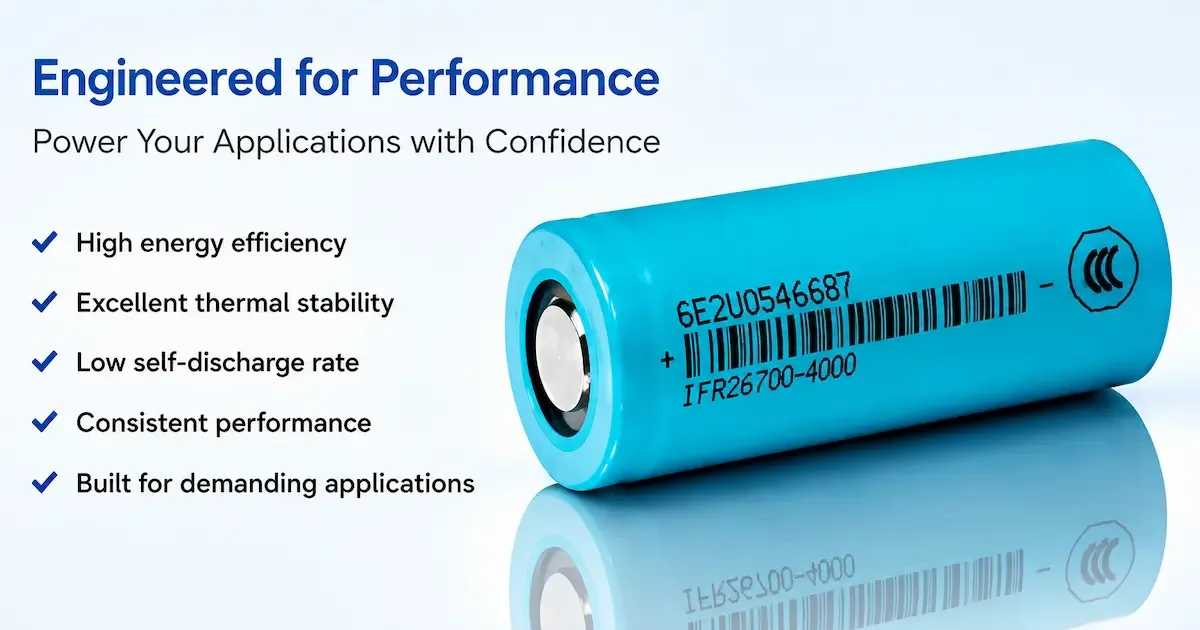
The IFR26700-4000 is a 3.2V 4000mAh lithium iron phosphate battery cell designed for applications that require dependable power, strong thermal stability, long service life, and consistent discharge performance. Its 26700 cylindrical format provides a practical balance between capacity, current capability, compact dimensions, and system integration flexibility.
IFR26700-4000 LiFePO4 Battery Cell Overview
The IFR26700-4000 LiFePO4 battery cell uses lithium iron phosphate chemistry to deliver stable electrical performance and excellent thermal characteristics. With a nominal capacity of 4.0Ah and nominal energy of 12.8Wh, it is suitable for battery packs and energy systems where safety, durability, and predictable performance are important.
The cell supports a standard 0.5C charge and discharge rate, while its specified continuous current capability can reach 2C for charging and 3C for discharging under the stated conditions. This makes the IFR26700-4000 suitable for applications that need both reliable everyday operation and higher power output.
Model: IFR26700-4000
Chemistry: LiFePO4 / Lithium Iron Phosphate
Minimum Capacity: 3.96Ah
Maximum Charge Voltage: 3.65V
Discharge Cut-off: 2.0V
IFR26700-4000 Product Specifications
The following specifications provide a practical reference for engineers, battery pack designers, system integrators, and procurement teams evaluating the IFR26700-4000 for commercial or industrial applications.
| Parameter | Specification |
|---|---|
| Model | IFR26700-4000 |
| Battery Chemistry | LiFePO4 (Lithium Iron Phosphate) |
| Nominal Capacity | 4.0Ah / 4000mAh |
| Minimum Capacity | 3.96Ah |
| Nominal Energy | 12.8Wh |
| Nominal Voltage | 3.2V |
| Maximum Charge Voltage | 3.65V |
| Discharge Cut-off Voltage | 2.0V |
| Internal Resistance | AC ≤20mΩ; DC ≤35mΩ |
| Standard Charge Current | 0.5C (2A) |
| Standard Discharge Current | 0.5C (2A) |
| Maximum Continuous Charge Current | 2C (8A), not for cycle operation |
| Maximum Continuous Discharge Current | 3C (12A), not for cycle operation |
| Standard Charge Method | 25°C ±2°C, 0.5C constant-current charge to 3.65V, followed by constant-voltage charging until current decreases to 0.05C |
| Standard Discharge Method | 25°C ±2°C, 0.5C constant-current discharge to 2.0V |
| Operating Temperature | Charge: 0°C to 55°C; Discharge: -20°C to 60°C |
| Storage Temperature | Less than 1 year: -20°C to 25°C; less than 3 months: -20°C to 45°C |
| Dimensions | Height: 71 ±0.2mm; Diameter: 26.4 ±0.2mm |
| Weight | 90 ±3g |
Specifications should be confirmed with LNC Batteries before final design, qualification, or production use. Charging and discharging must be performed according to an appropriate battery management and safety system.
Key Advantages of the IFR26700-4000 LiFePO4 Cell
High Safety
LiFePO4 chemistry is known for strong thermal and chemical stability, making it a suitable choice for energy systems where safety and predictable operation are priorities.
Long Cycle Life
The cell is designed for extended service with good capacity retention, helping battery systems maintain dependable performance over long-term use.
Stable Energy Output
A 4.0Ah nominal capacity and 12.8Wh nominal energy provide consistent power for compact battery packs and energy storage configurations.
High Current Capability
Low specified internal resistance supports stable current delivery, while the stated 3C continuous discharge capability can serve higher-load applications under suitable conditions.
Wide Operating Temperature Range
The specified discharge range of -20°C to 60°C gives system designers flexibility for applications exposed to changing environmental conditions.
Compact 26700 Format
The cylindrical 26700 form factor is convenient for modular battery pack construction and customized energy storage designs.
Applications of 26700 LiFePO4 Battery Cells
The IFR26700-4000 is designed for high-performance energy applications requiring reliable power, long service life, and stable LiFePO4 chemistry. Its cylindrical format makes it suitable for both individual-cell use and multi-cell battery pack configurations.
Electric Vehicles and Mobility
Suitable for e-bikes, electric scooters, low-speed vehicles, and other compact electric mobility systems where dependable energy delivery is required.
Energy Storage Systems
Can be integrated into home energy storage, solar storage, backup power, and off-grid energy systems with an appropriate BMS and pack design.
Renewable Energy
LiFePO4 cells can support solar and wind energy storage systems that require stable performance and long-term cycling capability.
Industrial Equipment
Applicable to AGV robots, industrial tools, control equipment, backup power systems, and other industrial energy applications.
Portable Power Systems
The cell can be used in portable power stations and customized power solutions where compact cylindrical cells are preferred.
Custom Battery Packs
Suitable for OEM and ODM battery pack projects requiring customized voltage, capacity, current, dimensions, connectors, protection, and BMS configurations.
Charging, Discharging, and Storage Considerations
Standard Charging
Under the specified standard test conditions, the IFR26700-4000 is charged at 0.5C (2A) at 25°C ±2°C using constant-current charging to 3.65V, followed by constant-voltage charging until the current decreases to 0.05C.
Standard Discharging
The standard discharge method uses a 0.5C (2A) constant-current discharge at 25°C ±2°C until the cell reaches the 2.0V discharge cut-off voltage.
Temperature and Storage
Charging is specified from 0°C to 55°C, while discharge is specified from -20°C to 60°C. For storage, the specified range is -20°C to 25°C for less than one year and -20°C to 45°C for storage of less than three months. Actual battery pack storage conditions should also consider state of charge, BMS requirements, packaging, humidity, and transportation regulations.
Reliable Battery Solutions for Global Energy Applications
LNC Batteries provides lithium battery cells and customized battery pack solutions for global customers, supporting reliable energy solutions across various industries and applications.
A Decade of Expertise, Powering the Future of Energy
For more than a decade, LNC Batteries has been dedicated to delivering reliable lithium battery solutions that empower smarter, cleaner, and more efficient energy applications worldwide.
Built on extensive industry experience, trusted manufacturing partnerships, and professional battery expertise, LNC connects advanced battery technologies with real-world application requirements.
From battery cell selection and technical support to customized OEM battery pack solutions, LNC helps customers develop safe, reliable, and optimized energy solutions across diverse industries.
Official Website: LNC Batteries
Frequently Asked Questions About IFR26700-4000
What type of battery is the IFR26700-4000?
The IFR26700-4000 is a 3.2V 4000mAh cylindrical LiFePO4 battery cell. LiFePO4 stands for lithium iron phosphate, a lithium battery chemistry valued for thermal stability, safety characteristics, and long service life.
What is the nominal energy of the IFR26700-4000 cell?
The nominal energy is 12.8Wh, calculated from the nominal voltage of 3.2V and nominal capacity of 4.0Ah.
What is the maximum continuous discharge current?
The specified maximum continuous discharge current is 3C, equivalent to 12A for the 4.0Ah cell. This rating is stated as not intended for cycle operation and should be applied according to the manufacturer’s conditions.
Can the IFR26700-4000 be used to build a custom battery pack?
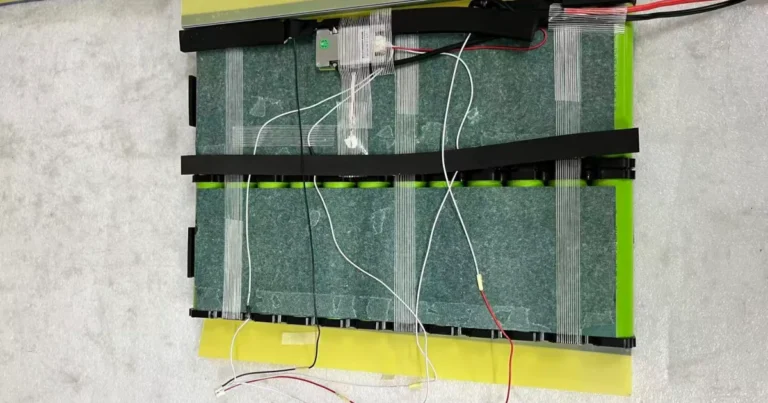
Yes. The 26700 cylindrical format can be used in customized battery pack designs. Pack voltage, capacity, current requirements, BMS configuration, thermal management, mechanical structure, and electrical protection should be engineered for the specific application.
Can LNC Batteries provide customized battery solutions?
LNC Batteries provides lithium battery cells and customized OEM battery pack solutions. Customers can work with LNC on cell selection, technical requirements, pack configuration, and application-specific energy solutions.