Lithium batteries are widely used in energy storage systems, electric vehicles, portable power stations, and many other applications. But many users still have the same questions: How many years can a lithium battery really last? How many cycles does it support? When should a battery be replaced?
Many manufacturers advertise 8-10 years of lifespan or 2000+ cycles. However, actual battery performance depends on battery chemistry, usage conditions, temperature, charging habits, and load requirements.
This article explains lithium battery cycle life, degradation factors, replacement standards, and how to extend battery lifespan.
What Does Lithium Battery Cycle Life Mean?
Many people misunderstand battery cycle life. A common misconception is: One charge equals one cycle. In reality, a battery cycle is calculated based on the total amount of energy discharged, not the number of times the charger is connected. For example:
| Usage Method | Cycle Calculation |
|---|---|
| Battery used from 100% to 50%, then charged back to full | About 0.5 cycle |
| Two times of 50% discharge and recharge | About 1 complete cycle |
| Battery used from 100% to 0% | 1 complete cycle |
This is why shallow charge and shallow discharge usually help extend lithium battery lifespan.
Frequently draining a battery completely before charging creates deeper cycles and accelerates battery aging.
LiFePO4 vs Lithium-ion Battery: Which One Lasts Longer?
Different lithium battery chemistries have different cycle life characteristics.
The two most common battery types used in custom battery packs are LiFePO4 batteries and lithium-ion batteries.
| Battery Type | Typical Cycle Life | Typical Lifespan | Common Applications |
|---|---|---|---|
| LiFePO4 Battery | 2000+ cycles | 4-6 years or longer | Solar energy storage, backup power, portable power stations, low-speed vehicles |
| Lithium-ion Battery | 1000-1500 cycles | 3-5 years | Electric vehicles, power tools, high-power equipment |
LiFePO4 Battery
LiFePO4 (Lithium Iron Phosphate) batteries are known for excellent safety, thermal stability, and long service life. Main advantages:
- High safety performance
- Excellent thermal stability
- Slow capacity degradation
- Long cycle life
- Good durability for long-term operation
LiFePO4 batteries are commonly used in applications where reliability and lifespan are the priority, such as energy storage systems, backup power, and industrial applications.
Lithium-ion Battery
Lithium-ion batteries provide higher energy density and stronger power output. Main advantages:
- Higher energy density
- Higher voltage output
- Strong discharge performance
- Compact size
They are widely used in applications requiring higher power and smaller battery size, such as electric vehicles, power tools, and portable devices.
When Should a Lithium Battery Be Replaced?
A lithium battery does not need to completely stop working before replacement.
The common industry standard is:
When the remaining capacity drops below 80% of the original rated capacity, the battery is generally considered to have reached the end of its useful life.
For example:
A 100Ah battery that can only provide 70-80Ah capacity may still work, but its runtime and performance have already decreased significantly.
| Remaining Capacity | Battery Condition |
|---|---|
| Above 80% | Normal operating condition |
| 70%-80% | Battery aging stage, performance reduction becomes noticeable |
| Below 70% | Significant capacity loss, replacement should be considered |
Battery degradation usually results in:
- Shorter runtime
- Increased internal resistance
- More heat generation
- Larger cell voltage imbalance
- More frequent BMS protection
Why Do Lithium Batteries Age Faster?
The same battery cells can have very different lifespans depending on operating conditions.
Deep Discharge
Frequently using a battery until it is almost empty creates deeper discharge cycles, which increases stress on battery cells and accelerates capacity loss.
High Temperature
High temperature is one of the biggest factors affecting lithium battery aging.
Long-term exposure to direct sunlight, poor ventilation, or continuous high-temperature operation can cause permanent capacity loss.
Improper Storage
Both fully charged storage and completely empty storage can negatively affect battery health.
For long-term storage, keeping the battery around 40%-60% charge is generally recommended.
Overload Operation
Continuous operation beyond the designed discharge current increases heat generation and internal resistance, which can shorten battery lifespan.
How to Extend Lithium Battery Lifespan?
Proper usage habits can significantly improve battery service life.
| Method | Recommendation |
|---|---|
| Charging habits | Avoid frequent full discharge cycles and maintain moderate charge levels |
| Temperature control | Avoid high-temperature environments and direct sunlight |
| Storage | Keep around 40%-60% charge during long-term storage |
| Battery maintenance | Monitor cell balance and voltage difference |
| Load matching | Operate within the designed current range |
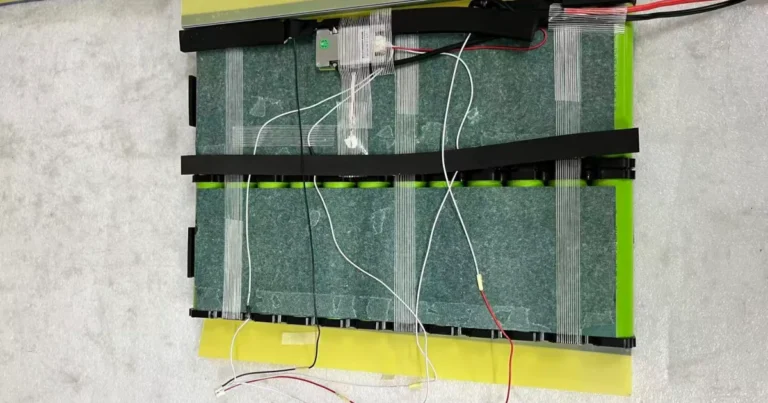
A suitable Battery Management System (BMS) also plays an important role by protecting the battery from overcharge, over-discharge, over-current, and cell imbalance.
Conclusion
Lithium batteries can provide years of reliable performance when properly selected and maintained.
Actual battery lifespan depends on:
- Battery chemistry
- Cycle depth
- Operating temperature
- Charging and discharging habits
- Load conditions
- Battery management system quality
LiFePO4 batteries are generally preferred for applications requiring long service life and stability, while lithium-ion batteries are suitable for applications requiring higher energy density and stronger power output.
With proper usage and maintenance, a high-quality lithium battery pack can often achieve:
5-6 years or longer of reliable operation.
For custom lithium battery solutions, LNC Battery provides battery cell selection, BMS integration, and customized battery pack solutions for different application requirements.