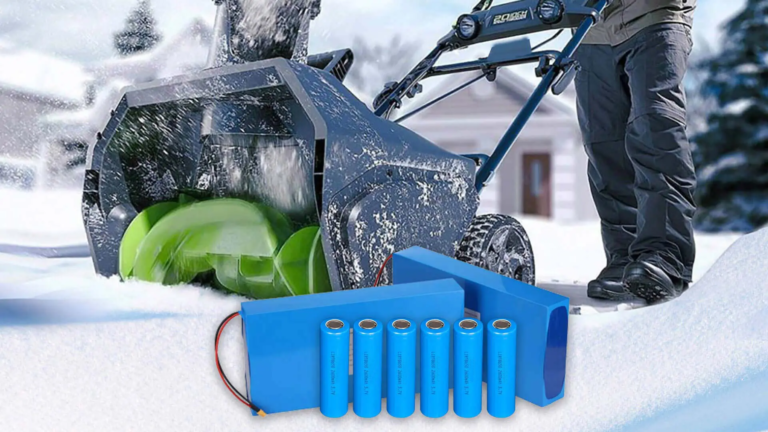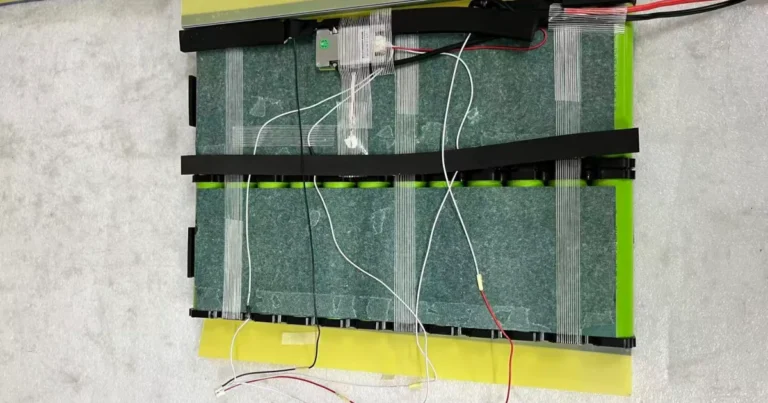
The output cable size of a lithium battery pack is an important part of battery system design, but it is often overlooked.
Many users pay attention to battery cells and BMS selection but ignore the external power cable. However, the cable directly affects current transmission efficiency, voltage stability, heat generation, and overall system safety.
If the cable size is too small, typical problems may occur:
- Voltage drops suddenly during high-current operation
- Equipment performance becomes unstable
- Cable insulation overheats, softens, or becomes damaged
- Actual battery capacity utilization decreases
- BMS may trigger low-voltage protection during high-current discharge
On the other hand, an oversized cable increases unnecessary cost and weight.
Therefore, the correct cable size should be selected based on current requirements, cable material, cable length, voltage drop, and application environment.
How to Select the Right Battery Cable Material
The cable material has a significant impact on conductivity, resistance, flexibility, heat generation, and long-term reliability. Different cable materials have different performance characteristics in lithium battery applications.
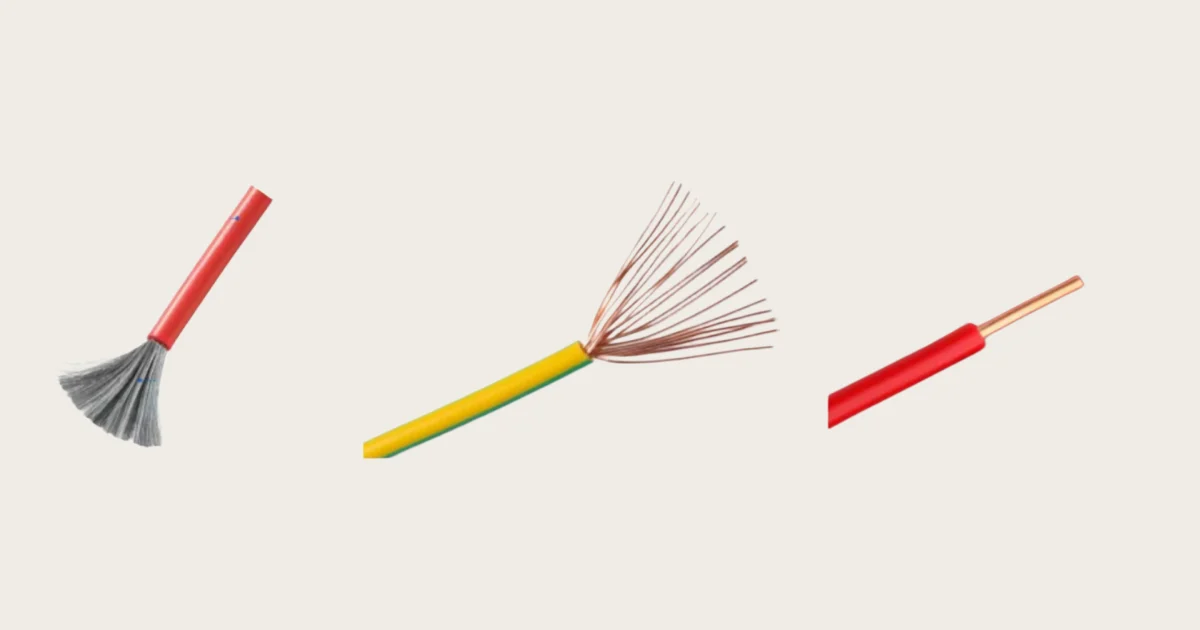
Pure Oxygen-Free Copper Multi-Strand Flexible Cable
Pure oxygen-free copper multi-strand flexible cable is one of the best choices for lithium battery pack applications. Advantages:
- High electrical conductivity
- Extremely low internal resistance
- Excellent flexibility and bending resistance
- Suitable for battery systems exposed to vibration
- Lower heat generation during high-current operation
- Current carrying capability follows standard copper cable specifications
It is widely used in lithium battery packs, electric vehicles, energy storage systems, and industrial equipment.
The main disadvantage is that the cost is slightly higher than non-standard copper-clad aluminum cables.
Copper-Clad Aluminum Cable (CCA)
Copper-clad aluminum cable consists of an aluminum core with a thin copper coating. Although it has a lower price and lighter weight, its electrical performance is much lower compared with pure copper cable. Disadvantages:
- Higher resistance
- Lower current carrying capability
- Faster temperature rise during high-current discharge
- Higher risk of insulation damage under overload conditions
CCA cables are generally only suitable for low-voltage and low-power applications. They are not recommended for high-current lithium battery systems.
Single-Core Hard Copper Wire
Single-core hard copper wire has acceptable conductivity, but it is not suitable for applications requiring frequent movement or vibration. Because the cable is rigid, repeated bending may cause:
- Metal fatigue
- Breakage near connection points
- Poor electrical contact
It is mainly suitable for fixed electrical cabinets or short-distance stationary wiring. For mobile battery applications, flexible multi-strand cables are recommended.
Silicone Insulated Flexible Cable
Silicone insulated flexible cable is widely used in professional lithium battery pack assembly. It uses a silicone insulation layer combined with multi-strand ultra-fine oxygen-free copper conductors. Advantages:
- Extremely flexible and easy to install
- High temperature resistance
- Excellent aging resistance
- Good corrosion resistance
- Strong resistance to repeated bending and mechanical stress
- Suitable for narrow battery compartments and complex wiring environments
Typical temperature range: -60°C to 200°C
Compared with ordinary PVC cables, silicone cables provide better thermal stability and flexibility, making them suitable for electric vehicles, robotics, portable power systems, and custom lithium battery packs.
The disadvantage is that silicone cables cost more than standard PVC cables, and the soft insulation layer should be protected from sharp edges during installation.
Battery Cable Current Capacity Reference Table
The correct cable size should be selected according to the continuous operating current of the battery system.
The following values are based on pure copper multi-strand cables under normal temperature conditions. The reference length is within 1 meter. Actual current capacity may vary depending on cable length, installation method, ambient temperature, and heat dissipation conditions.
| Cable Size | Continuous Current Rating | Typical Applications |
|---|---|---|
| 2.5mm² | ≤20A | Small lithium battery devices, portable equipment, low-power applications |
| 4mm² | 30-35A | Small battery packs and low-current applications |
| 6mm² | 45-55A | Standard lithium battery packs and electric mobility applications |
| 10mm² | 70-85A | High-power battery packs, electric vehicles, and power systems |
| 16mm² | 110-130A | Industrial batteries, forklifts, and energy storage systems |
| 25mm² | 160-190A | High-power energy storage systems and inverter applications |
For short periods, the cable may handle higher peak current than the continuous rating. However, long-term operation near the maximum current limit is not recommended because excessive heat can accelerate cable aging and reduce safety.
How to Calculate Voltage Drop for Battery Cables
For battery systems with longer cable distances, voltage drop becomes an important factor that should not be ignored.
When current passes through a cable, resistance causes energy loss in the form of heat. Excessive voltage drop can reduce system performance and cause problems such as:
- Reduced output power
- Lower motor performance
- Unstable equipment operation
- Premature BMS low-voltage protection
- Reduced usable battery capacity
The simplified voltage drop calculation formula for copper cable is:
Voltage Drop(V) = 0.0175 × Cable Length(m) × Current(A) ÷ Cable Area(mm²)
Where:
- 0.0175 represents copper resistivity under normal temperature conditions
- Cable length refers to the total length of positive and negative wires
- Current refers to the actual operating current
- Cable area refers to conductor cross-sectional area
Voltage Drop Example
Assume:
- Battery cable total length: 8 meters
- Working current: 60A
Using a 6mm² copper cable:
Voltage drop: 0.0175 × 8 × 60 ÷ 6 = 1.4V
The voltage loss is too high, which may cause noticeable power reduction.
Using a 10mm² copper cable: 0.0175 × 8 × 60 ÷ 10 = 0.84V
The performance improves, but the voltage drop is still relatively high.
Using a 16mm² copper cable: 0.0175 × 8 × 60 ÷ 16 = 0.525V
The system performance is significantly improved.
For most lithium battery applications, keeping voltage drop below 0.5V is recommended. For high-power systems, shorter cable length and larger cable size can further reduce energy loss.
Battery Charge and Discharge Cable Selection
The cable size should be selected according to whether it is used for charging or discharging.
For a common-port BMS, the same cable is used for both charging and discharging. In this case, the main cable should be selected according to the maximum discharge current because discharge current is usually much higher than charging current.
The cable size should never be selected based only on charging current, as this may result in insufficient current capacity during operation.
For a separate charge and discharge port BMS, the cables can be selected separately:
| Cable Type | Selection Standard |
|---|---|
| Discharge cable | Based on maximum continuous and peak discharge current |
| Charging cable | Based on charger output current |
For example, if a battery pack uses a 10mm² discharge cable, the charging cable may use 4-6mm² depending on the charger current.
Battery Cable Installation Requirements
Correct cable installation is essential for maintaining long-term battery safety and reliability.
Even if the cable size is correctly selected, improper installation may increase resistance, cause overheating, or create potential safety risks.
When connecting battery cables, proper terminals should be used.
Recommended practices:
- Use high-quality copper terminals
- Apply professional crimping methods
- Ensure connection points are tight and secure
- Keep terminals clean and free from oxidation
Directly wrapping loose copper strands around screws is not recommended because it may cause poor contact, increased resistance, and localized heating.
For multi-strand cables, proper crimping improves both electrical performance and mechanical strength.
Battery cables should also be protected from external damage.
Recommended protection methods include:
- Corrugated protective tubing
- Heat-resistant sleeves
- Heat shrink tubing
- Cable fixing clips
During installation, avoid placing cables near:
- Sharp metal edges
- High-temperature components
- Moving mechanical parts
- Areas with repeated friction
Damaged cable insulation may lead to short circuits, reduced reliability, or battery safety issues.
A battery system should also include appropriate overcurrent protection devices.
Recommended protection components include:
- Fuses
- Circuit breakers
- Battery protection switches
These devices can quickly disconnect the circuit during abnormal conditions such as short circuits or excessive current, helping prevent cable overheating and potential fire hazards.
The fuse or protection device rating should match the battery output capability and cable specifications.
Common Mistakes When Choosing Battery Cables
Selecting Cable Size Only Based on Battery Capacity
Battery capacity (Ah) alone does not determine the required cable size.
Cable selection mainly depends on:
- Maximum continuous discharge current
- Peak discharge current
- Cable length
- Application environment
For example, two battery packs with the same capacity may require completely different cable sizes if one is used for a low-power IoT device and the other is used for a high-current motor system.
Ignoring Voltage Drop
Some cables may safely carry the required current but still cause excessive voltage loss, especially in systems with long cable distances or high operating current.
Ignoring voltage drop can result in:
- Reduced output performance
- Lower energy efficiency
- Shorter operating time
Selecting a suitable cable size helps minimize power loss and improve overall system efficiency.
Using Low-quality Cable Materials
Low-cost cables may use inferior materials such as copper-clad aluminum instead of pure copper.
Compared with high-quality copper cables, low-quality cables usually have:
- Higher resistance
- Lower current capacity
- More heat generation
- Shorter service life
For lithium battery applications, pure copper flexible cables are recommended for better performance and reliability.
Conclusion
The external power cable is a critical part of every lithium battery system.
Although battery cells and BMS are usually considered the most important components, the cable directly affects current transmission efficiency, voltage stability, safety, and battery performance.
Choosing the correct battery cable size requires considering:
- Cable material
- Continuous and peak current
- Cable length
- Voltage drop
- Installation environment
- Safety protection requirements
A properly designed cable system can reduce energy loss, prevent overheating, improve system reliability, and extend the service life of lithium battery applications.
For custom lithium battery packs, LNC Battery provides complete battery solutions including battery cell selection, BMS integration, cable configuration, connectors, and customized battery pack assembly based on different application requirements.