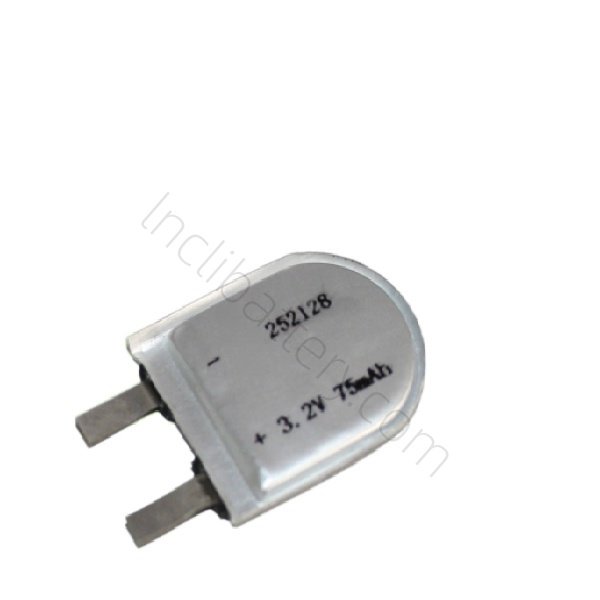
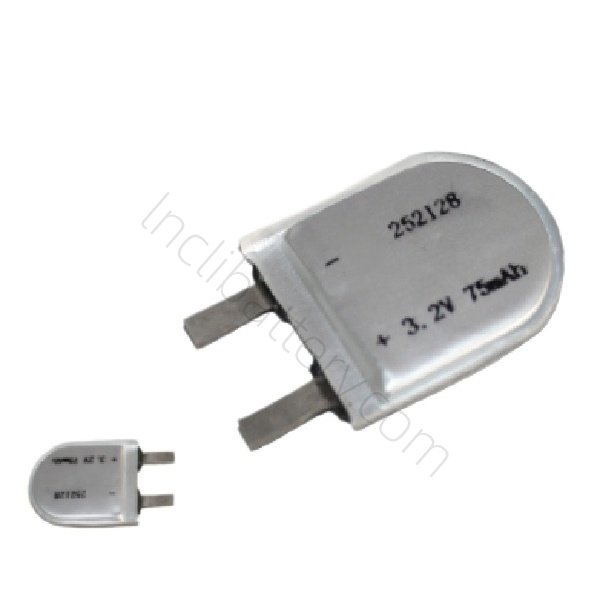
3.7V 100mAh U252128 Ultra-Thin U-Shaped LiPo Battery for Wearable Devices
- Model: U252128
- Voltage: 3.7V
- Capacity: 100mAh
- Size: 28 × 21 × 2.5mm
U252128 Ultra-Thin U-Shaped LiPo Battery
Ultra-thin 3.7V U-shaped lithium polymer battery designed for compact wearable and portable electronics, offering high energy density, stable performance, and efficient space utilization.
U-Shaped Design
Ultra-Thin Battery
High Energy Density
Product Overview
The U252128 is an ultra-thin U-shaped lithium polymer battery engineered for space-constrained electronic devices requiring flexible structural integration.
Its unique geometry allows installation in devices with irregular internal layouts, maximizing available space utilization.
With stable output performance, low self-discharge, and long cycle life, it is suitable for compact consumer and wearable electronics.
Technical Specifications
Explore more LiPo Battery Models , including ultra thin, slim, standard, high capacity, cylindrical and custom shaped LiPo batteries.
Key Features
Ultra-Thin Design
Engineered for compact devices with strict space limitations.
U-Shaped Structure
Optimized for irregular internal device layouts.
High Energy Efficiency
Maximizes energy utilization in limited space.
Stable Performance
Reliable output for continuous low-power applications.
Low Self-Discharge
Maintains capacity during long-term storage.
Applications
- Wearable Devices
- Two-Way Radios (Walkie Talkies)
- MP3 / Portable Audio Devices
- PDA / Handheld Electronics
- Other Compact Electronic Devices
OEM/ODM Battery Solutions
We support customized ultra-thin U-shaped lithium polymer batteries for space-constrained devices, including size, capacity, and structural optimization for embedded applications.
📩 Request A Quote
Looking for a reliable lithium battery supplier?
Send us your battery requirements and our engineering team will provide a customized solution and quotation.
Why Contact LNC?
✔ 10+ Years Battery Industry Experience
✔ Custom Lithium Battery Design Support
✔ OEM / ODM Battery Pack Solutions
✔ Global Shipment & Technical Support
Get Your Battery Solution