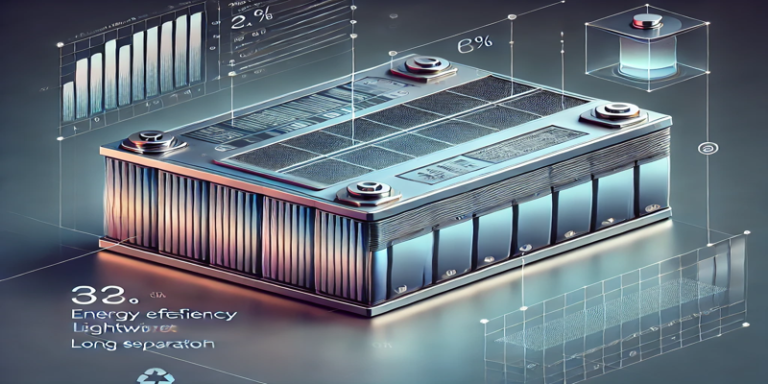
Key points of lithium-ion battery internal resistance detection technology
Lithium-Ion Battery Internal Resistance Testing: Methods, Standards, and What Actually Matters
Internal resistance is the single fastest indicator of battery health. Capacity fades slowly over hundreds of cycles, but resistance climbs steadily from day one. By the time capacity drops below 80%, resistance has often already doubled. That is why manufacturers, BMS engineers, and field technicians treat internal resistance measurement as the first line of defense against battery failure.
The problem is not a lack of methods. It is a lack of clarity about which method applies to which situation, what each number actually means, and why two tests on the same cell can give wildly different results.
What Internal Resistance Actually Consists Of
Before picking a test method, you need to understand what you are measuring. Lithium-ion battery internal resistance is not a single number. It is two numbers layered on top of each other.
Ohmic resistance comes from electrode materials, electrolyte, separator, current collectors, tab welds, and contact interfaces. This part stays relatively stable as long as the physical structure does not degrade. Temperature affects it, but predictably — in a roughly linear fashion within normal operating ranges.
Polarization resistance sits on top of the ohmic component. It appears the moment current starts flowing and grows with current magnitude. It splits further into electrochemical polarization (the electrode reaction cannot keep pace with electron flow) and concentration polarization (lithium ions cannot intercalate and de-intercalate fast enough inside the active material). This is the part that makes DC testing tricky, because polarization contamination is unavoidable the longer you push current through the cell.
The window to capture pure ohmic resistance is narrow — roughly 1 to 2 milliseconds after current application. After that, polarization creeps in and the two resistances become inseparable in a DC measurement.
The Two Main Testing Approaches
AC Internal Resistance: What Most Production Lines Use
AC impedance testing injects a small alternating current signal — typically 1 kHz at 50 mA — into the cell and measures the voltage response. The calculation is straightforward: Rac = Ua / Ia, where Ua is the RMS voltage and Ia is the RMS current.
The beauty of this method is that the high-frequency signal bypasses polarization entirely. The electrochemical reactions simply cannot follow a 1 kHz oscillation, so what you measure is almost pure ohmic resistance. This is why IEC 62620:2014 and JIS C 8715-1:2018 specify AC testing for individual cells, and why production lines rely on it for go/no-go decisions.
The trade-off is sensitivity to noise. A 50 mA signal on a cell with 5 milliohms of resistance produces a voltage response of 250 microvolts. Any electromagnetic interference, thermal EMF from dissimilar metals, or ripple on the current source can swamp that signal. Four-terminal (Kelvin) sensing is not optional here — it is mandatory. Two-wire measurements include lead resistance and contact resistance, which on milliohm-scale readings makes the entire measurement meaningless.
DC Internal Resistance: What BMS Engineers Actually Depend On
DC testing forces a current pulse through the cell and watches the voltage drop. The formula is equally simple: Rdc = ΔU / ΔI. But the devil is in the timing.
IEC 61960-3:2017 specifies a two-step pulse for battery packs: discharge at 0.2C for 10 seconds, record voltage U1, then immediately jump to 1.0C for 1 second, record voltage U2. The DC resistance is Rdc = (U1 – U2) / (I2 – I1). The short second pulse at high current is designed to capture the voltage change before polarization dominates.
IEC 62620:2014 and JIS C 8715-1:2018 use a different pulse scheme tailored to cell type. Super-low rate cells get a 30-second pulse at lower current. High-rate cells get a 5-second pulse at higher current. The discharge current depends on the cell category — S-type cells use 0.125C, E-type use 0.5C, M-type use 3.5C, and H-type use 7.0C or higher.
The HPPC (Hybrid Pulse Power Characterization) test, described in the FreedomCAR Battery Test Manual, takes this further. It runs a sequence of discharge and charge pulses at different SOC levels — typically 10% DOD increments from 90% SOC down to 10% SOC — and extracts both discharge resistance (Rd) and charge resistance (Rc) from the voltage response. This is the gold standard for battery modeling because it gives you resistance as a function of SOC, not just a single number.
Why Your Two Measurements Never Match
Here is the frustration every technician hits eventually. You measure a cell with an AC tester and get 4.2 milliohms. Then you hit it with a DC pulse and get 6.8 milliohms. Both instruments are working fine. They are just measuring different things.
AC testing sees only the ohmic component. DC testing sees ohmic plus whatever polarization built up during the pulse. On a fresh cell, the difference might be 10 to 20%. On an aged cell with thickened SEI layers and sluggish electrode kinetics, the gap can exceed 50%.
This is not a measurement error. It is physics. And it matters enormously for BMS design. If your state-of-charge estimation uses an AC resistance value but your power delivery is limited by DC resistance, your SOC readings will drift and your available power predictions will be wrong.
Practical Testing Conditions That Most People Get Wrong
Temperature Control Is Not Optional
Internal resistance shifts dramatically with temperature. Below 0°C, resistance can climb to three times the room-temperature value. Above 40°C, the electrolyte conductivity improves but the SEI layer thickens, creating a different kind of resistance increase over time.
IEC 61960-3:2017 requires testing at 20°C ± 5°C. IEC 62620:2014 and JIS C 8715-1:2018 require 25°C ± 5°C. If you are testing at ambient room temperature without compensation, your numbers are not comparable to any spec sheet and not useful for trending.
State of Charge Matters More Than You Think
Resistance varies across the SOC range. It is typically lowest around 50% SOC and highest near both ends of the charge window. IEC 62620:2014 requires discharging to 50% ± 10% SOC before testing. IEC 61960-3:2017 requires a full charge followed by 1 to 4 hours of rest. Skipping these steps introduces variability that can mask real degradation or create false alarms.
Rest Time After Charging
A freshly charged cell shows elevated resistance because lithium concentration gradients have not yet equalized. The standards address this explicitly — rest for 1 to 4 hours after charging. In practice, 2 hours is enough for most chemistries. Skip this step and you will overestimate resistance by 10 to 30%.
Less Common Methods Worth Knowing About
Four-Wire Kelvin Sensing
This is not a separate test method — it is a requirement for any method that claims milliohm accuracy. Two wires carry current. Two separate wires sense voltage directly at the cell terminals. The voltage-sensing leads carry almost no current, so their resistance does not affect the reading. Without four-wire sensing, you are measuring cell resistance plus lead resistance plus contact resistance, and on a 5 milliohm cell with 2 milliohms of lead resistance, your reading is 40% wrong.
Bridge Methods
The unbalanced bridge method uses a Wheatstone bridge configuration with the cell as one arm. You adjust known resistors until the bridge balances under both switch-open and switch-closed conditions, then calculate Rx = R01 × (R03 / R02). This method is precise but slow — it requires manual or automated balancing at each measurement. It shows up mostly in laboratory settings rather than production floors.
The double-resistor method is simpler: put a known resistor in series with the cell, measure the voltage divider ratio, and back-calculate the internal resistance using r = (E/U – 1) × R. Accuracy depends entirely on how close the external resistor is to the actual internal resistance. When they match, error drops to nearly zero. When they do not match, the error can be enormous.
Online AC Injection
For systems that cannot take the battery offline, AC injection superimposes a small AC signal on top of the normal operating current. The battery responds with a small AC voltage ripple, and the ratio gives you resistance in real time. The challenge is separating the injected signal from the much larger DC operating current and from noise on the bus. Four-terminal connection is essential here too — the current injection path and the voltage sensing path must be physically separate.
What Resistance Numbers Tell You About Real-World Performance
A 1 milliohm increase in internal resistance drops energy efficiency by roughly 5%. On a 60 kWh pack, that is 3 kWh lost to heat during every full cycle. Over a year of daily cycling, that is over 1,000 kWh wasted — enough to reduce range by 15 to 20%.
More critically, resistance governs thermal runaway risk. For every 1 milliohm increase, temperature rise rate climbs by approximately 0.3°C per minute under load. A cell with resistance 50% above spec is not just inefficient — it is a thermal hazard waiting for a trigger.
Resistance also drives connection diagnostics. In a series string, a single loose tab or corroded contact can add 2 to 5 milliohms to one cell. Because resistance adds in series, that one bad connection heats up, degrades faster, and can pull the entire module into failure. DC resistance testing catches this. AC testing often misses it because the high-frequency signal can bypass poor mechanical contacts through capacitive coupling.
Matching the Method to the Actual Question You Are Trying to Answer
Use AC impedance when you need a fast, repeatable go/no-go check on fresh cells during production. Use DC pulse testing when you are building a battery model, programming a BMS, or estimating real-world power delivery. Use HPPC when you need resistance across the full SOC range for simulation work. Use online AC injection when the battery cannot come offline.
No single method replaces the others. They answer different questions about the same cell. The worst thing you can do is compare an AC number from one instrument against a DC number from another and conclude that something is wrong. Nothing is wrong. You are just comparing apples to oranges.