UL 2054 and UL 2743 are both related to battery safety, but they target different product levels and applications.
The simplest way to understand the difference is:
UL 2054 focuses on the safety of the battery pack itself, while UL 2743 focuses on the safety of the complete portable power product.
1. Different Standards, Different Core Products
| Dimension | UL 2054 | UL 2743 |
|---|---|---|
| Full Name | Standard for Household and Commercial Batteries | Standard for Portable Power Packs |
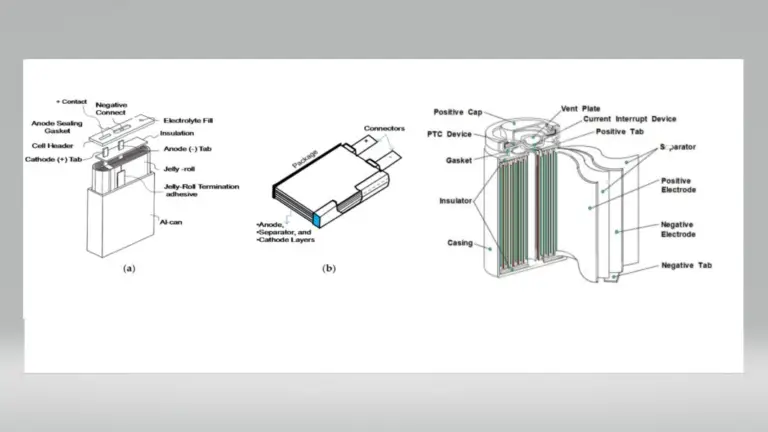
| Core Product | Battery pack itself — a finished battery assembly consisting of cells, BMS, protection circuits, enclosure, and related components | Complete portable power pack — an integrated product combining the battery, inverter/charger, multiple output interfaces, enclosure, and other functions |
| Level of Application | Component-level standard — evaluates the safety of the battery as a component | End-product-level standard — evaluates the overall safety of the portable power product |
| First Edition | An established standard with a long history covering household and commercial batteries | First published in 2016, developed specifically for portable power and emergency-starting products |
In one sentence:
UL 2054 addresses whether the battery pack itself is safe; UL 2743 addresses whether the complete portable power product is safe.
2. Differences in Product Scope
What Products Does UL 2054 Cover?
UL 2054 covers primary (non-rechargeable) and secondary (rechargeable) battery packs used as power sources in household and commercial products.
It covers various battery chemistries, including:
- Lithium-ion batteries
- Lithium-metal batteries
- Nickel-based batteries
- Other applicable battery technologies
Typical applications include:
- Laptop battery packs
- Power tool battery packs
- Battery packs built into portable power products
- Small energy storage battery packs
- Medical equipment battery packs
Not typically covered by UL 2054:
- Individual battery cells — generally covered by UL 1642
- Automotive propulsion batteries — generally covered by UL 2580
- Large stationary energy storage systems — generally evaluated under standards such as UL 1973 and UL 9540
What Products Does UL 2743 Cover?
UL 2743 covers portable or movable power packs, including products using lead-acid or lithium-ion batteries.
The standard includes products designed to be portable, such as products weighing no more than 18 kg or products equipped with wheels for movement by one person.
The maximum energy capacity depends on the battery technology:
- Lithium-ion: ≤ 20 kWh / 72 MJ
- Lead-acid: ≤ 70 kWh / 252 MJ
- Supercapacitors: ≤ 3 kWh / 10.8 MJ
These products may integrate multiple functions, such as:
- Automotive emergency starting, with output up to 24 V
- LED lighting
- Inverter with AC output
- Built-in air pump
- Voltage meter
- Other auxiliary functions
UL 2743 also excludes certain products that fall under other standards, such as ordinary power banks/mobile power supplies and electric vehicle charging equipment.
3. Comparison of Main Test Requirements
UL 2054: Focus on Battery Pack Safety
| Category | Key Test Items |
|---|---|
| Electrical Safety | Short-circuit tests at 20°C/55°C, overcharge tests, abusive overcharge, over-discharge/forced discharge, limited-power-source tests |
| Mechanical Safety | Crush test (13 kN), impact test, acceleration test, vibration test, drop/impact tests, 250 N static force test |
| Enclosure & Construction | Battery pack enclosure tests, molded-case pressure-release tests |
| Environmental & Abuse Testing | Flame exposure, projectile-related testing, high-temperature testing, temperature cycling |
| Typical Safety Criteria | No fire, explosion, leakage, or enclosure rupture; temperature limits must remain within the applicable requirements |
UL 2743: Focus on Complete Product Safety
| Category | Key Test Items |
|---|---|
| Electrical Safety | Power input tests, normal/abnormal charging operation, lithium charging system tests, capacitor discharge, leakage current testing (≤0.5 mA), dielectric withstand testing, overload testing, grounding continuity |
| Output & Protection | Output voltage/power stability, overcurrent and overtemperature protection, output short-circuit testing (short-circuit resistance ≤10 mΩ) |
| Mechanical & Structural Safety | Drop testing, enclosure strength/static pressure, handle strength, plug strain relief, cold-bend testing, stability testing |
| Environmental Testing | Rain testing, rainproof/raintight requirements, leakage-current testing under humidity conditions, temperature cycling |
| Battery System | Battery cells may need to comply with applicable standards such as UL 1642, UL 62133, UL 2580, or UL 1973; battery pack thermal runaway protection/testing may apply to systems above 1 kWh |
| Additional Functions | Inverter evaluation, potentially including UL 1741; wireless charging up to 240 VA; automotive emergency-starting function testing |
The Key Difference
UL 2054 places greater emphasis on the battery pack’s safety under abnormal or abusive conditions, such as crushing, flame exposure, impact, and other severe conditions.
UL 2743 places greater emphasis on the safety of the complete product under normal and abnormal operating conditions, including a broader range of electrical safety requirements such as dielectric withstand, leakage current, grounding, charging, and output protection.
In other words, UL 2743 evaluates many system-level functions that are not the primary focus of UL 2054.
4. Different Capacity and Voltage Limits
| Item | UL 2054 | UL 2743 |
|---|---|---|
| Capacity Limit | No specific general product-level capacity limit | Lithium-ion ≤20 kWh; lead-acid ≤70 kWh; products exceeding the applicable scope require a different certification approach |
| Voltage Limits | No general product-level voltage classification | Indoor products: ≤60 Vdc / 42.4 VAC peak; outdoor products: ≤30 Vdc / 21.2 VAC peak |
| Battery Chemistry | Covers lithium, nickel-based, primary batteries, and other applicable technologies | Primarily covers lead-acid and lithium-ion battery technologies |
5. When Is UL 2054 Used?
UL 2054 is generally relevant when you are supplying a standalone battery pack or battery assembly, for example:
- Replacement battery packs
- Backup battery packs
- Battery packs used as components inside other equipment
- Battery packs requiring a separate battery safety evaluation
- Battery products sold through platforms such as Amazon, where the applicable product requirements call for UL 2054
UL 2054 is also commonly considered together with a cell-level standard such as UL 1642.
For example:
Battery cell → UL 1642
Battery pack → UL 2054
The exact certification requirements still depend on the final product and applicable certification pathway.
6. When Is UL 2743 Used?
UL 2743 is generally relevant when the product being sold is a complete portable power product, such as:
- Portable power stations
- Outdoor power supplies
- Emergency backup power products
- Portable jump starters
- Products with AC inverter output and multiple interfaces
These products combine a battery system with other electrical and functional components, so the safety evaluation extends beyond the battery pack itself.
The battery pack inside a UL 2743 product may also need to meet applicable battery-level requirements, depending on the certification design and construction.
7. The Product-Level Relationship at a Glance
A simplified way to understand the relationship is:
UL 1642 → Cell Level
UL 2054 → Battery Pack Level
UL 2743 → Portable Power Product Level
UL 9540 → Larger Energy Storage System Level
The further to the right, the higher the level of product integration and the more system-level functions and safety aspects need to be considered.
Therefore:
UL 2054 is primarily a battery-pack safety standard, while UL 2743 is a portable power product safety standard.
They are not simply alternatives to each other. Depending on the product design, they can play complementary roles at different levels of the product.
For battery projects, the correct standard should always be determined based on the final product, application, electrical architecture, battery chemistry, capacity, and target market rather than simply selecting a standard based on battery voltage or capacity.
LNC supplies customized LiFePO4 battery packs, lithium-ion battery packs, portable power batteries, and OEM/ODM battery solutions through qualified manufacturing partners.