Lithium-Ion Battery Coulombic Efficiency: Proven Optimization Paths That Actually Work
Coulombic efficiency is the single most honest metric a lithium-ion cell can offer. It tells you exactly how much charge you put in versus how much you get back — no voltage curves, no capacity numbers, just raw charge accounting. For commercial cells, pushing CE above 99.9 percent is table stakes. But getting there, especially for the first cycle, is where real engineering happens.
The formula is deceptively simple: CE equals discharge capacity divided by charge capacity, multiplied by 100. In practice, every fraction of a percent lost is a story — lithium consumed by side reactions, electrons wasted on parasitic decomposition, ions trapped in structures that will never release them again. Optimizing CE means hunting down every one of those losses and closing the loop.
Why First-Cycle Efficiency Is Always the Hardest Battle
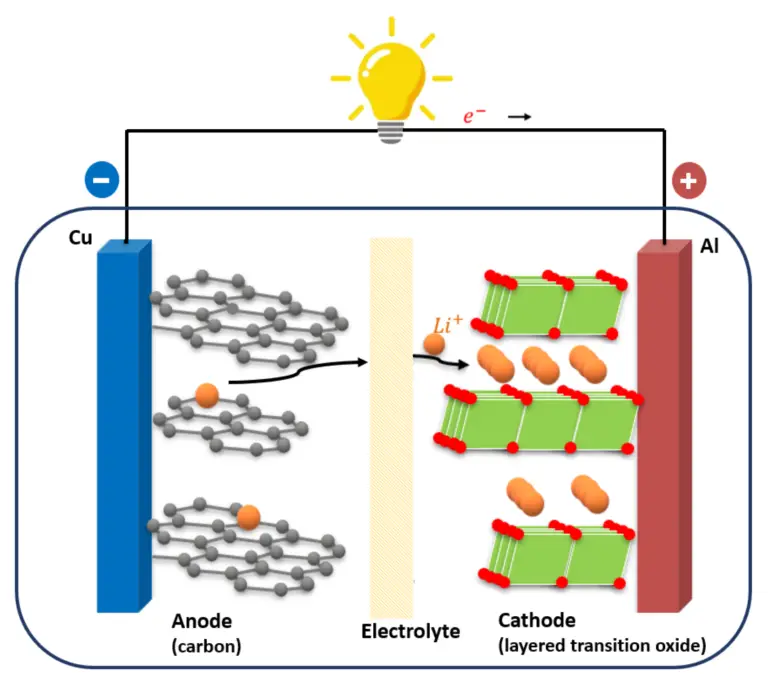
The initial coulombic efficiency, often called ICE, is where most of the damage happens. During that very first charge, the electrolyte meets the anode surface and does what it always does — it decomposes. This reaction forms the solid electrolyte interphase, or SEI, a thin film that protects the anode but costs lithium ions in the process. For a standard graphite anode, this alone eats 5 to 15 percent of the available lithium. That is gone forever. You will never get it back.
Silicon-based anodes make things worse. Their massive volume expansion during lithiation cracks the SEI repeatedly, forcing it to reform cycle after cycle. Each reformation consumes more electrolyte and more active lithium. The result is a first-cycle efficiency that can plummet below 80 percent for some silicon composite designs.
This is why ICE matters more than any subsequent cycle number. A cell that starts at 85 percent ICE is already behind before it ever ships.
Electrode Material Engineering: The Foundation of High CE
Surface Coating and Defect Passivation
The most direct way to reduce irreversible lithium loss is to stop the side reactions before they start. Carbon coatings on silicon particles, oxide layers on cathode surfaces, and graphene-based edge passivation all serve the same purpose — they shield reactive sites from direct contact with the electrolyte.
Research has shown that oxidizing graphite edges with graphene oxide can push ICE from the mid-80s to above 90 percent. The coating acts as a barrier, limiting electrolyte decomposition at the most vulnerable surface defects. For silicon anodes, a uniform carbon shell reduces the effective surface area exposed to electrolyte, which directly cuts the SEI formation cost.
The trade-off is real. Thicker coatings protect better but block lithium-ion transport and reduce accessible capacity. The sweet spot sits around a few nanometers — thin enough to let ions through, thick enough to block electron-driven decomposition.
Pre-Lithiation: Replacing What Was Lost
If you cannot prevent lithium loss, the next best move is to replace it before the cell ever cycles. Pre-lithiation adds lithium back to the anode to compensate for the irreversible consumption during SEI formation.
Chemical pre-lithiation using aryl-lithium reagents has emerged as one of the most precise approaches. A 2025 study demonstrated that 1-methylnaphthalene lithium, with a redox potential of 0.21 V versus Li/Li+, can be tuned to match the irreversible lithium storage threshold of graphite at 0.22 V. This potential-matching strategy makes the reaction self-terminating — it stops exactly when the lithium loss is compensated, no more, no less. The result is an ideal 100 percent ICE without the risk of over-lithiation that plagues traditional methods.
Other pre-lithiation routes include stabilized lithium metal powder dispersed in solvent, direct contact with lithium foil, and electrochemical pre-lithiation using a temporary half-cell. Each has its own complexity and cost profile, but the underlying logic is identical: give the anode the lithium it will lose, so the first real cycle starts from a neutral baseline.
Electrolyte Design: Controlling the Chemistry at the Interface
Solvent and Salt Selection
The electrolyte is not just a passive ion carrier. It is an active participant in every side reaction that drains CE. The choice of solvent, salt, and additive determines how aggressively the electrolyte attacks electrode surfaces.
Fluoroethylene carbonate, or FEC, is the most widely used additive for silicon and silicon-oxide anodes. It decomposes preferentially over standard carbonate solvents, forming a thinner, more uniform SEI rich in inorganic components like LiF. This film is denser and more stable, which reduces continuous electrolyte consumption during cycling. Tests show that adding just 3 percent FEC can lift first-cycle efficiency from the mid-70s to above 88 percent for silicon-oxide systems.
High-concentration electrolytes and localized high-concentration designs push this further. By altering the solvation structure around lithium ions, these formulations suppress free solvent molecules from reaching the anode surface. Less free solvent means less decomposition. Less decomposition means higher CE.
Additive-Driven SEI Quality
Not all SEI layers are created equal. An SEI rich in inorganic species like LiF and Li2CO3 is dense, ion-conductive, and electron-blocking. An SEI dominated by organic species like ROCO2Li is porous, unstable, and keeps growing. The goal of additive design is to steer SEI composition toward the inorganic side.
Vinylene carbonate, lithium difluorooxalate, and various phosphorous-based additives have all shown the ability to promote inorganic-rich SEI formation. The key is matching the additive’s reduction potential to the operating voltage window of the anode. Add it too early and it wastes capacity. Add it at the right moment and it pays for itself many times over.
Cell-Level Strategies: Temperature, Rate, and Voltage Control
Thermal Management as a CE Lever
Temperature has an outsized effect on coulombic efficiency, and most engineers underuse it as a tuning knob. Higher temperatures accelerate lithium-ion diffusion, which reduces polarization and improves reaction kinetics. This can boost ICE by a few percentage points compared to room-temperature formation.
But there is a ceiling. Too much heat accelerates electrolyte decomposition and SEI growth in parallel, which eventually drags CE back down. The optimal formation temperature for most graphite systems sits between 25 and 45 degrees Celsius. For silicon anodes, slightly elevated temperatures during the first cycle help the SEI form uniformly before the volume expansion starts tearing it apart.
A well-designed thermal management system does not just keep the cell cool. It keeps it in the narrow band where side reactions are slow but ion transport is fast. That band is where CE peaks.
Voltage Window and Rate Optimization
Charging too fast or to too high a voltage in the first cycle invites disaster. A slow formation rate, typically C/20 or slower, gives the SEI time to grow uniformly rather than in patches. Patchy SEI means uneven current distribution, which means localized over-lithiation, which means more lithium trapped in dead zones.
The upper cutoff voltage matters too. For graphite anodes, keeping the first charge below 0.1 V versus Li/Li+ avoids co-intercalation of solvent molecules, which is an irreversible loss mechanism that directly tanks CE. For high-nickel cathodes, limiting the upper voltage reduces transition metal dissolution, which otherwise poisons the anode and degrades CE over hundreds of cycles.
Monitoring CE in Real Time: Why BMS Depends on It
Coulombic efficiency is not just a lab number. In a battery management system, CE is the backbone of state-of-charge estimation through coulomb counting. If the BMS assumes a CE of 99.9 percent but the real value is 99.5 percent, the error compounds with every cycle. After 500 cycles, that 0.4 percent gap becomes a 200 mAh drift — enough to make a range estimate completely unreliable.
This is why modern BMS platforms track CE dynamically, adjusting the coulomb counting algorithm as the cell ages. A cell that starts at 99.95 percent CE and degrades to 99.80 percent over its lifetime needs a BMS that catches that shift. Otherwise, the SOC readout drifts silently until the user hits unexpected cutoff.
The Path Forward: Stacking Small Wins Into Big Gains
No single technique delivers perfect CE on its own. The highest-efficiency cells combine material-level surface engineering, electrolyte optimization, precise pre-lithiation, and intelligent formation protocols. Each layer catches a different fraction of the loss. Stacked together, they push ICE past 95 percent for silicon anodes and keep cycle-to-cycle CE above 99.95 percent for hundreds of cycles.
The research direction is clear. Potential-matched chemical pre-lithiation gives you a self-terminating, uniform lithiation that traditional methods cannot match. FEC-based electrolytes give you a dense SEI that stops growing. Carbon coatings give you a physical shield that reduces the reaction surface. Put all three on a silicon-carbon anode, and the ICE problem goes from a showstopper to a solved equation.