Choosing between NMC (Lithium Nickel Manganese Cobalt Oxide) and LFP (Lithium Iron Phosphate) batteries depends on several key factors, as each chemistry has distinct advantages and trade-offs. Here is a breakdown to help you decide based on your needs:
1. Energy Density
NMC: Higher energy density, making it ideal for applications where compact size and longer runtimes are critical (e.g., electric vehicles with extended range).
LFP: Lower energy density, suitable for applications where size and weight are less of a concern, like stationary energy storage or short-range electric vehicles.
2. Cycle Life
NMC: Moderate cycle life (1,000~2,000 cycles).
It is better for applications where battery replacement is manageable and energy density is prioritized.
LFP: Superior cycle life (2,000~4,000+ cycles).
Excellent for applications requiring longevity, such as solar energy storage or long-lasting EV fleets.
3. Cost
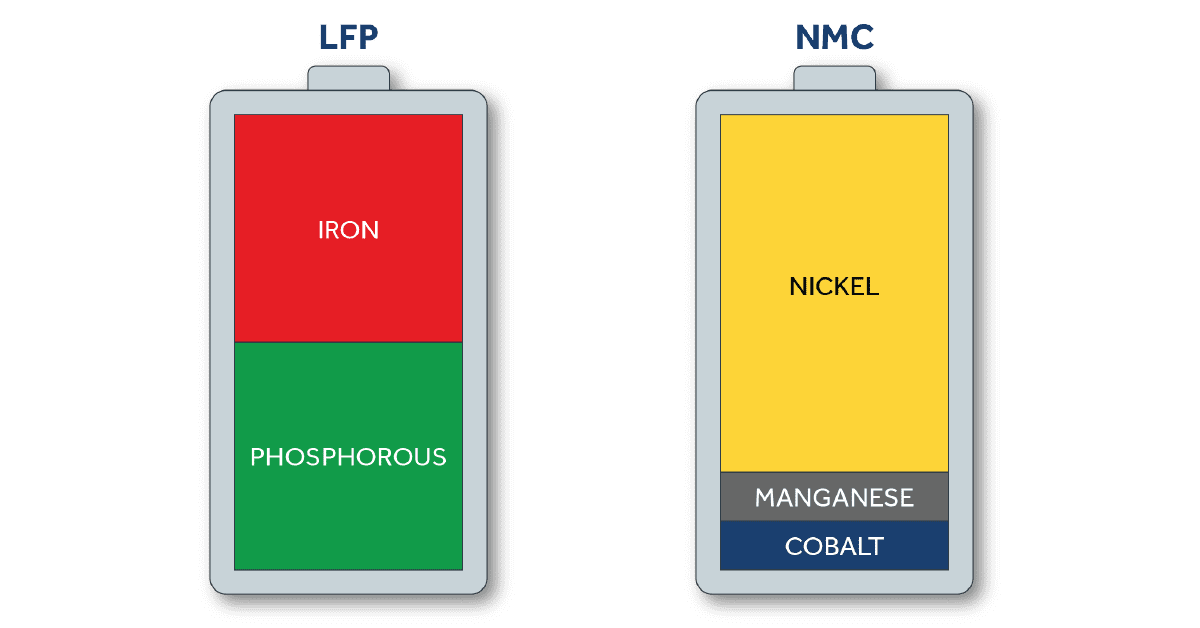
NMC: Higher cost due to the use of cobalt and nickel, which are expensive and subject to price volatility.
LFP: Lower cost as it uses more abundant and less expensive materials (iron and phosphate).
4. Safety
NMC: More prone to thermal runaway, especially under high temperatures or stress. Requires robust thermal management systems.
LFP: Safer and more thermally stable, making it a better choice for applications in hot climates or those requiring high safety standards.
5. Temperature Tolerance
NMC: Moderate temperature tolerance. Performance can degrade in extreme conditions.
LFP: High temperature tolerance, performing well in both hot and cold environments.
6. Weight
NMC: Lighter due to higher energy density, better for weight-sensitive applications (e.g., EVs, drones).
LFP: Heavier, making it less ideal for weight-sensitive applications.
7. Environmental and Ethical Concerns
NMC: Uses cobalt, which raises ethical and environmental concerns related to mining practices. Efforts are ongoing to reduce or eliminate cobalt content.
LFP: More environmentally friendly as it avoids cobalt and nickel, using widely available and non-toxic materials.
8. Applications
NMC:
Long-range electric vehicles.
Portable electronics.
Applications where space and weight are limited.
LFP:
Stationary energy storage (solar and grid systems).
Short-range EVs, buses, and fleets.
Applications prioritizing safety and longevity.
9. Performance Under Heavy Load
NMC: Better performance under high power output or energy-intensive applications.
LFP: Performs well but may not deliver the same peak performance as NMC under heavy load.
Decision Matrix
| Factor | Choose NMC | Choose LFP |
| Energy Density | High priority | Moderate priority |
| Safety | Manageable risks | Critical priority |
| Cost Sensitivity | Secondary | Primary |
| Longevity | Moderate importance | High importance |
| Weight/Space Limitations | Important | Less critical |
| Environmental Concerns | Acceptable trade-offs | High priority |
| Temperature Tolerance | Moderate | High |
| Application Examples | Long-range EVs, smartphones | Solar storage, EV fleets, buses |
Conclusion
Choose NMC for applications where energy density, weight, and compact design are critical, such as long-range EVs or portable devices.
Choose LFP for applications prioritizing safety, cost-efficiency, and longevity, such as energy storage systems or budget-friendly EVs.