
Understanding Lithium Battery Thermal Runaway and the Correct Fire Response.
Lithium batteries are now widely used in modern life, including:
- Power banks
- Electric bicycles
- Electric vehicles
- Portable power stations
- Home energy storage systems
- Industrial battery equipment
With the rapid growth of lithium battery applications, battery fire safety has become an increasingly important topic.
When a lithium battery catches fire, many people immediately think of using a common ABC dry powder fire extinguisher. However, opinions online are often conflicting. Some people believe dry powder extinguishers are effective, while others claim they are completely useless.
So, what is the correct answer?
A dry powder fire extinguisher can help control a lithium battery fire in the early stage, but it cannot eliminate the root cause of the fire — internal thermal runaway. It is not considered the most effective solution for fully controlling lithium battery fires.
To understand why, we first need to understand the difference between traditional fires and lithium battery fires.
1. Why Lithium Battery Fires Are Different From Normal Fires
Most common fires, such as:
- Paper fires
- Wood fires
- Fuel fires
- Household electrical fires
depend heavily on oxygen from the surrounding environment.
The working principle of a dry powder extinguisher is:
- Covering the flame surface
- Interrupting the combustion reaction
- Reducing oxygen contact
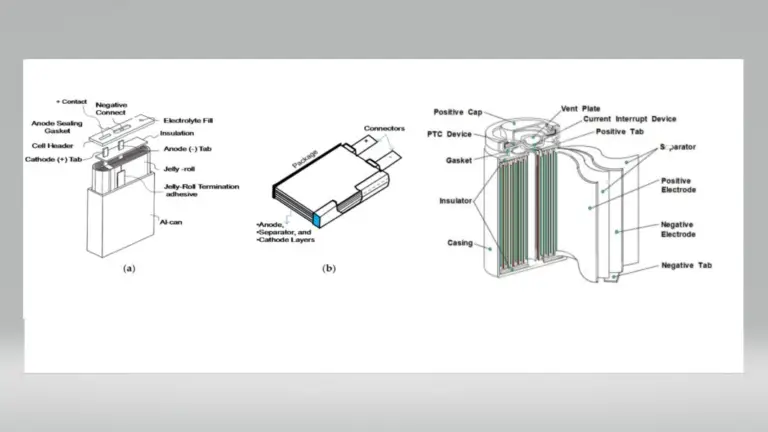
This method works effectively for many conventional fire situations. However, lithium battery fires are fundamentally different. A lithium-ion battery fire is usually caused by electrochemical thermal runaway. When a battery cell experiences:
- Internal short circuit
- Overcharging
- Physical damage
- Excessive heat exposure
the internal temperature can rise rapidly. Once thermal runaway begins:
- Electrolyte decomposition occurs
- Electrode materials break down
- Flammable gases are generated
- Chemical reactions continue inside the battery cell
In some cases, the battery itself can release oxygen-containing gases during decomposition. This means lithium batteries do not burn in the same way as ordinary combustible materials.
2. Why Dry Powder Extinguishers Cannot Fully Stop Lithium Battery Fires
The biggest limitation of dry powder extinguishers is that they mainly work on the external flame.
They can:
- Reduce visible flames
- Slow down fire spreading
- Provide extra time for evacuation
However, they usually cannot:
- Penetrate the battery enclosure
- Cool internal battery cells
- Stop the thermal runaway reaction
After the external flame disappears, the battery cells may still remain at extremely high temperatures.
The internal chemical reaction can continue, creating a risk of:
- Re-ignition
- Secondary fires
- Chain reactions in multiple battery cells
This is why some lithium battery fires appear to be extinguished but restart later. The absence of visible flames does not always mean the battery is safe.
3. Additional Problems After Using Dry Powder Extinguishers
Dry powder extinguishers also create secondary issues.
The fine powder residue may enter:
- Battery gaps
- Circuit boards
- Electrical connectors
- Cooling channels
This can:
- Damage electronic components
- Make inspection more difficult
- Increase maintenance problems after the incident
For expensive battery equipment, the damage caused by powder contamination can be significant.
4. Should You Keep a Dry Powder Fire Extinguisher at Home?
The answer is yes — but it must be used correctly.
A dry powder extinguisher still has emergency value during the early stage of a lithium battery fire.
Situation 1: Smoke or Small Initial Flame
If the battery only shows:
- Smoke
- Small flames
- Early signs of overheating
and nearby combustible materials have not caught fire:
A dry powder extinguisher can be used to:
- Suppress external flames
- Slow fire expansion
- Create time for evacuation
After that, the battery should be isolated safely and cooled.
Situation 2: Severe Thermal Runaway
If the battery shows:
- Swollen or damaged housing
- Violent flames
- Large amounts of dark smoke
- Explosive sounds
the thermal runaway process is likely already severe.
At this stage:
- Do not approach closely
- Do not attempt repeated firefighting
- Avoid exposure to toxic gases and extreme heat
The safest action is:
- Evacuate immediately
- Keep others away from the area
- Call professional firefighters
5. Cooling Is the Key to Controlling Lithium Battery Fires
The biggest difference between ordinary fires and lithium battery fires is the firefighting strategy.
Traditional fires: Control combustion by limiting oxygen
Lithium battery fires: Control the reaction by reducing temperature
Carbon dioxide extinguishers and dry powder extinguishers mainly suppress flames but provide limited cooling capability.
Water-based firefighting methods are often more effective because water has a high heat capacity and can continuously absorb heat.
Professional firefighting methods usually focus on:
- Continuous water cooling
- Preventing heat transfer to nearby cells
- Reducing battery temperature below the thermal runaway threshold
The goal is not only to remove the flame, but to stop the internal reaction.
6. What Should You Do If a Lithium Battery Catches Fire?
Case 1: Smoke Without Open Flame
Recommended actions:
- Disconnect power if it is safe to do so
- Move away from the battery area
- Place the battery in an open area away from flammable materials if possible
- Keep a safe distance and monitor the situation
Do not:
- Cover the battery tightly
- Seal it in a container
- Hold or press the battery
Case 2: Small Initial Flame
Recommended actions:
- Use a dry powder extinguisher to suppress external flames
- Maintain a safe distance
- Apply cooling measures if possible
- Monitor for possible re-ignition
Case 3: Violent Burning or Battery Explosion
Recommended actions:
- Stop attempting to extinguish the fire
- Evacuate immediately
- Close doors if possible to slow fire spread
- Call emergency services
Personal safety should always come first.
Conclusion: Understanding Lithium Battery Fire Behavior Improves Safety
A dry powder fire extinguisher is not useless for lithium battery fires, but it should not be considered a complete solution.
The key challenge with lithium battery fires is not only the visible flame — it is the internal thermal runaway reaction.
Proper battery safety requires:
- High-quality battery cells
- Reliable Battery Management Systems (BMS)
- Effective thermal management design
- Proper charging and protection systems
At LNC Battery, we focus on providing reliable lithium battery cells, LiFePO4 battery solutions, and customized battery packs designed for safer operation in energy storage, industrial equipment, and mobility applications.
Understanding battery technology and safety principles helps users select and operate lithium battery systems more safely.