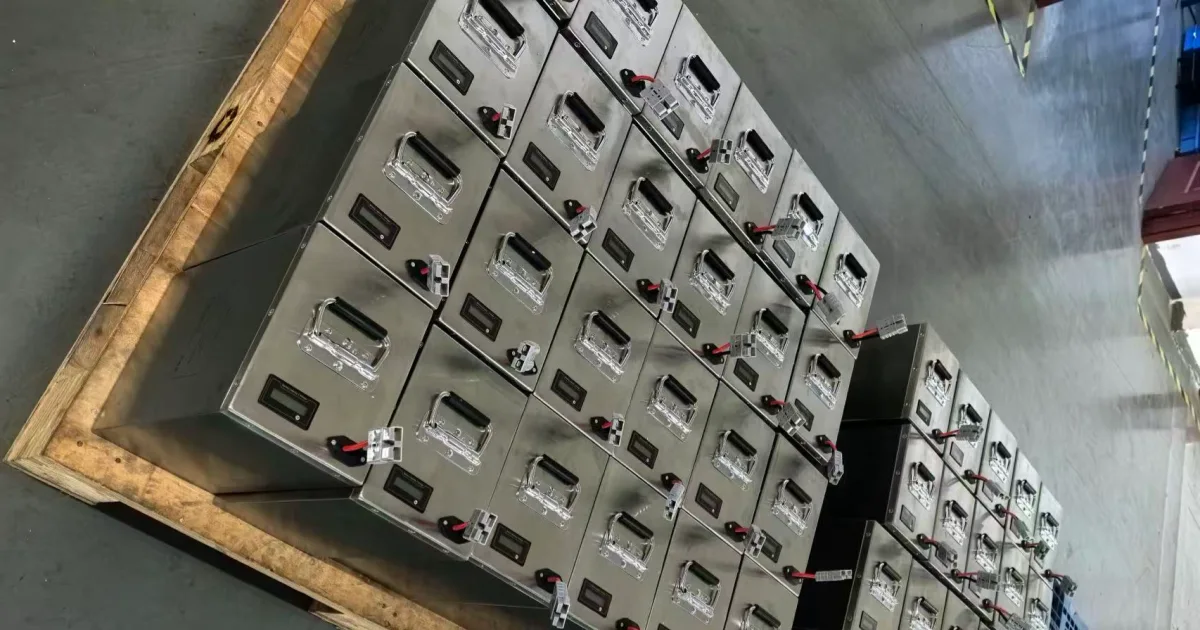
Battery Housing Design Guide for Protection, Waterproofing and Mechanical Safety
A lithium battery enclosure is not simply a box used to hold battery cells. It is a complete protection system designed to provide structural support, shock absorption, waterproof protection, heat management, and long-term mechanical reliability.
During lithium battery pack assembly, enclosure design directly affects the battery’s safety, service life, and performance under real operating conditions.
This guide explains how to select battery housing materials, design internal protection structures, choose waterproof solutions, and implement standardized enclosure assembly processes for applications including electric vehicles, outdoor energy storage systems, portable power stations, and industrial battery packs.
1. Common Lithium Battery Enclosure Materials: Advantages and Applications
Selecting the correct enclosure material is the first step in battery pack design. Different applications require different levels of mechanical strength, thermal performance, and environmental protection.
1. ABS and PP Plastic Battery Housing
Advantages:
- Excellent electrical insulation
- Lightweight design
- Cost-effective solution
- Easy injection molding for customized shapes
- Convenient installation with built-in battery cell positioning structures
Limitations:
- Moderate impact resistance
- May soften or deform under high temperatures
- Not ideal for high-power battery packs with continuous high current output
Typical Applications:
- Small electric vehicle batteries
- Indoor energy storage systems
- Low-power mobility devices
- Consumer battery packs
2. Aluminum and Stainless Steel Battery Enclosures
Advantages:
- High mechanical strength
- Excellent heat dissipation capability
- Strong resistance against impact and compression
- Suitable for high-current and high-power battery applications
Limitations:
- Conductive materials require additional internal insulation protection
- Higher manufacturing cost
- Heavier compared with plastic housings
Typical Applications:
- High-power electric motorcycle batteries
- Electric tricycles
- Forklift batteries
- Industrial equipment battery systems
- Heavy-duty outdoor applications
3. Waterproof Plastic Battery Housing for Outdoor Applications
Advantages:
- Integrated sealing gasket and locking structure
- High IP protection rating
- Resistant to dust and water splash
- Suitable for outdoor environments
Limitations:
- Limited internal space
- Reduced heat dissipation performance
- High-power battery packs require additional thermal management design
Typical Applications:
- Outdoor solar energy storage systems
- Backup power batteries
- Outdoor monitoring equipment
- Electric vehicles used in rainy environments
4. Epoxy Potting and Fully Sealed Battery Design
For extreme operating environments, epoxy potting provides the highest protection level.
Advantages:
- Completely waterproof and dustproof
- Excellent vibration resistance
- Provides strong electrical insulation
- Prevents battery cells from moving inside the enclosure
Limitations:
- Difficult or impossible to repair after potting
- Poorer heat dissipation
- Increased weight
- Higher cost
Typical Applications:
- Underwater equipment
- Mining equipment
- High-humidity environments
- Corrosive industrial applications
2. Internal Shock Absorption and Cell Protection Design
A reliable battery enclosure requires more than an external shell. The internal structure must prevent vibration damage, cell movement, and insulation failures.
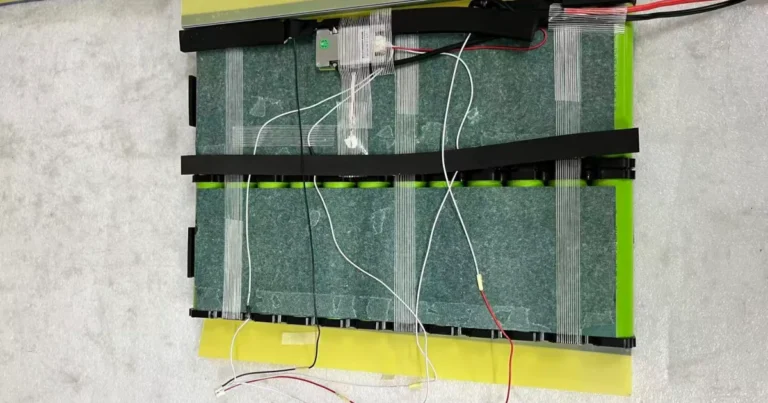
Cell Isolation Using Insulation Paper and Fiberglass Sheets
During cylindrical lithium battery pack assembly:
- Insulation paper (such as fish paper) is placed between battery cells
- Typical thickness: 0.1–0.2 mm
- Prevents nickel strip burrs from damaging the cell insulation layer
Additional support structures:
- 1–2 mm fiberglass sheets or epoxy boards are installed on the top and bottom surfaces
- They distribute external pressure evenly
- Prevent local stress concentration
A small expansion space should also be reserved:
- Around 0.5 mm clearance between cells and enclosure walls
- Prevents cell swelling from creating mechanical pressure
Gap Filling with EVA Foam and Silicone Foam
The space between the battery pack and enclosure should be properly filled to prevent movement during vibration.
EVA Foam Advantages:
- Lightweight
- Good shock absorption
- Cost-effective
Silicone Foam Advantages:
- Higher temperature resistance
- Better performance for high-power battery packs
- Provides both cushioning and thermal buffering
The filling material should have the correct compression level:
- Too tight → may damage battery cells
- Too loose → cannot effectively fix the battery pack
The correct standard is that the battery module should not move noticeably when pressed.
3. Battery Pack Structural Fixing Methods
Besides shock absorption materials, the battery pack needs reliable mechanical fixing to prevent cell movement during transportation and operation.
Using Battery Cell Holders and Brackets
For cylindrical lithium battery cells, dedicated plastic cell holders are commonly used.
Advantages:
- Each battery cell has an independent positioning slot
- Prevents cell movement during vibration
- Improves assembly consistency
- Reduces the risk of mechanical damage
For example, cylindrical battery packs using 18650, 21700, 26650, and 32700 cells usually require suitable cell spacers or holders to maintain proper alignment.
Reinforcement with High-Temperature Tape and Nylon Straps
For battery packs without plastic holders:
- High-temperature fiberglass tape can be used for reinforcement
- Nylon straps can provide additional mechanical support
- Battery modules should be securely bundled before installation into the enclosure
Important components such as:
- Battery Management System (BMS)
- Wiring harnesses
- Connectors
- Terminals
must be fixed separately.
Loose wiring inside the enclosure may cause:
- Solder joint damage
- Cable breakage
- Connection failure caused by vibration
4. Lithium Battery Waterproof Protection Design: Three Common Solutions
The required waterproof level depends on the actual application environment.
A higher IP rating provides better protection against water and dust, but it may also increase cost and affect thermal management.
Level 1: Basic Splash Protection (IP54 Battery Enclosure)
Recommended Applications:
- Daily commuting electric bikes
- Indoor or semi-outdoor battery systems
Design Solution:
- Apply waterproof foam sealing strips around enclosure joints
- Tighten cover screws evenly
- Install rubber cable protection rings at wire outlets
- Seal gaps with neutral silicone sealant
Protection Performance:
Suitable for:
- Rain splash
- Road water spray
- Daily outdoor usage
Not recommended for:
- High-pressure water cleaning
- Long-term water immersion
Level 2: Heavy Rain and Waterproof Protection (IP67 Battery Enclosure)
Recommended Applications:
- Outdoor energy storage systems
- Electric vehicles frequently exposed to rain
- Outdoor industrial equipment
Design Solution:
- Use waterproof battery housing with integrated sealing gasket
- Tighten screws diagonally to ensure even gasket compression
- Use waterproof cable glands for wire outlets
- Apply silicone sealing protection to internal connectors
Protection Performance:
IP67 battery packs can withstand:
- Heavy rain exposure
- Temporary shallow water immersion
- Dust and outdoor environmental conditions
This protection level is widely used for outdoor lithium battery applications.
Level 3: Fully Sealed Potting Design (IP68 Battery Enclosure)
Recommended Applications:
- Underwater equipment
- High humidity environments
- Highly corrosive industrial environments
Design Solution:
The complete battery assembly is filled with:
- Thermal conductive epoxy resin
- Silicone potting compound
The material fully covers:
- Battery cells
- Circuit boards
- Wiring connections
After curing, the battery becomes a fully sealed structure.
Protection Performance:
Advantages:
- Excellent waterproof performance
- Maximum vibration resistance
- Suitable for extreme environments
Disadvantages:
- Difficult maintenance after potting
- Higher manufacturing cost
- Increased weight
5. Standard Lithium Battery Pack Enclosure Assembly Process
A professional battery enclosure assembly process should follow standardized production steps.
Step 1: Secure the Battery Module
After completing series and parallel connections:
- Use fiberglass tape or nylon straps for reinforcement
- Ensure the battery module becomes a stable mechanical structure
Step 2: Apply Insulation Protection
Install:
- Fish paper insulation
- Epoxy support plates
- High-temperature insulation tape around welding areas
Purpose:
- Prevent short circuits
- Protect nickel strips and welding points
- Improve electrical safety
Step 3: Test Installation Inside the Housing
Place the battery module into the enclosure and check:
- Internal clearance
- BMS position
- Connector accessibility
- Cable routing
Ensure all components can operate safely without mechanical interference.
Step 4: Install Shock Absorption Materials
Fill gaps using:
- EVA foam
- Silicone foam
- Other customized cushioning materials
The battery pack should:
- Stay firmly fixed
- Avoid excessive compression
- Have no obvious movement when shaken
Step 5: Protect Cable Exits
For charging ports and output cables:
- Install rubber cable grommets
- Use waterproof cable glands
- Apply sealing materials where required
This prevents:
- Cable pulling damage
- Water penetration
- Connector failures
Step 6: Seal the Battery Enclosure Cover
Recommended procedure:
- Install waterproof sealing strips
- Tighten screws diagonally
- Apply even pressure around the enclosure
Avoid tightening one side completely first, as uneven pressure may reduce sealing performance.
Step 7: Final Quality Inspection
Before shipment, perform:
- Mechanical vibration inspection
- Visual appearance check
- Cable and connector inspection
- Enclosure sealing verification
A qualified battery pack should have:
- No abnormal noise when shaken
- No housing deformation
- Secure electrical connections
Conclusion: Battery Enclosure Design Determines Long-Term Reliability
Battery cells, BMS, and electrical design determine the performance capability of a lithium battery pack.
However, the enclosure design determines whether that performance can be maintained in real-world conditions.
A reliable lithium battery pack requires:
- Proper enclosure material selection
- Effective shock absorption design
- Reliable waterproof protection
- Professional assembly processes
By matching the enclosure structure with the application environment, battery packs can achieve better safety, longer service life, and more stable operation.
At LNC Battery, we provide custom lithium battery pack solutions, cylindrical battery cells, LiFePO4 battery cells, and OEM battery assembly services for industrial equipment, energy storage systems, electric vehicles, and customized applications.
Our engineering team can help select suitable battery cells, enclosure designs, protection solutions, and electrical configurations based on your project requirements.
Contact LNC Battery for customized lithium battery solutions.