Lithium-Ion Battery High-Current Discharge Performance: What You Need to Know
When it comes to pulling serious power from a lithium-ion cell, things get complicated fast. Not all lithium-ion batteries are created equal under heavy loads — and pushing the wrong chemistry past its limits can turn a reliable power source into a thermal nightmare. Understanding how these cells behave under high-current discharge is critical for anyone designing robots, power tools, electric vehicles, or any system that demands bursts of energy.
Why Most Lithium-Ion Cells Struggle With High Current
Here is the uncomfortable truth: standard lithium-ion batteries with cobalt oxide (LiCoO2) cathodes simply do not like being drained hard. When discharge current spikes beyond what the cell was designed for, the internal temperature climbs sharply. That heat is wasted energy — it eats into your runtime and degrades the cell from the inside out.
The reaction is straightforward. During discharge, lithium ions shuttle from the anode through the electrolyte to the cathode. At high currents, this migration happens too fast for the chemistry to keep up. Internal resistance generates heat, voltage sags earlier than expected, and the usable capacity drops noticeably. In extreme cases, without proper protection circuits, the cell can overheat to the point of permanent damage or worse.
Most manufacturers specify a maximum continuous discharge rate, and exceeding that number is not just poor engineering — it is a safety hazard. The general rule of thumb from industry practice is to keep discharge current at or below 1C. For a 5000mAh cell, that means 5A maximum. Go beyond that, and you are borrowing trouble.
Chemistry Makes All the Difference
Not every lithium-ion cell cries uncle under load. The cathode material is the single biggest factor determining high-current capability.
Cobalt Oxide: Fast but Fragile
LiCoO2 cells deliver excellent energy density and stable cycle life under normal conditions. But crank up the discharge rate, and they falter. The internal resistance rises, heat builds, and the voltage drops faster than you would like. These cells are best suited for applications with steady, moderate draw — smartphones, laptops, portable electronics. They are not built for the drag strip.
Iron Phosphate: Built for Abuse
Lithium iron phosphate (LiFePO4) cells are a completely different story. These cells can handle 20C discharge rates and beyond — some configurations push past 100C. For a cell rated at 800mAh, 1C means 800mA, but at 20C you are pulling 16A. That is the kind of current that makes electric vehicles and power tools possible.
The iron phosphate structure is inherently more stable. It tolerates rapid lithium-ion movement without the catastrophic heat buildup you see in cobalt-based cells. Cycle life also benefits — LiFePO4 cells routinely survive 2000 to 3000 cycles, and with advanced anode pairing, even 10,000 cycles is achievable.
Polymer and Solid-State Options
Full solid-state lithium-ion batteries using polymer electrolytes can achieve 10C or higher discharge rates with improved safety profiles. The polymer electrolyte serves double duty — it acts as both separator and ion conductor, reducing the risk of internal short circuits that plague liquid electrolyte cells under stress.
The Real Risks of Pushing Too Hard
Running a lithium-ion cell at excessive discharge current is not just about losing runtime. The damage is cumulative and often invisible until it is too late.
Overheating accelerates electrolyte decomposition. The solid electrolyte interphase (SEI) layer on the anode grows unevenly, consuming active lithium and permanently reducing capacity. If the discharge voltage drops below 2.2V per cell, you risk irreversible damage to the cathode structure. Most protection circuits are designed to cut off at around 2.5V for this reason.
Temperature compounds everything. The normal operating window for lithium-ion discharge sits between -20°C and +60°C. Outside that range, ion conductivity drops, internal resistance spikes, and the cell behaves unpredictably under load.
For high-current systems, the best protection is not just a current limit — it is a dual-dimension current-plus-temperature throttling system. When the cell or the protection board heats up, the current threshold automatically drops. This keeps things cool without sacrificing all performance. Engineers typically leave a 10 to 20 percent safety margin below the rated peak current to prevent accelerated aging.
What This Means for System Design
If your application demands serious burst power, do not start with a standard cobalt-based cell and hope for the best. Match the chemistry to the load. LiFePO4 is the workhorse for high-current discharge. Polymer-based or solid-state cells offer another path if weight and form factor matter.
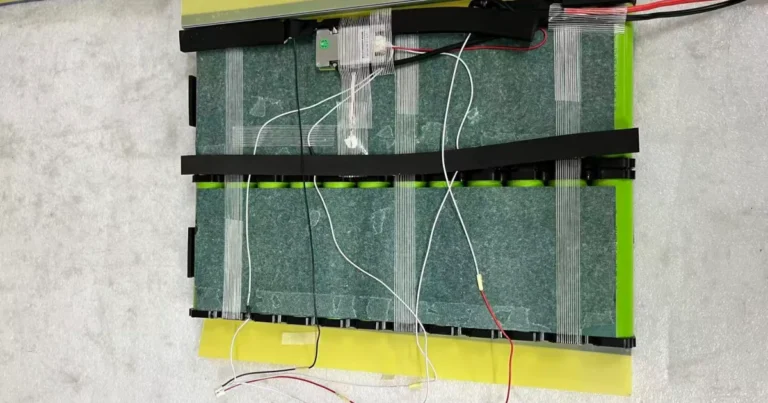
And never ignore the protection circuitry. A well-designed high-current protection board uses wide PCB traces, heavy copper pours, dedicated heat dissipation zones, and smart delay timing to distinguish between a harmless startup surge and a genuine overcurrent event. Getting that balance wrong either kills your uptime or kills your battery.
The bottom line: lithium-ion cells can deliver impressive current when the chemistry is right and the thermal management is serious. But treating all cells as interchangeable under heavy load is a recipe for shortened life, lost capacity, and potential safety failures.