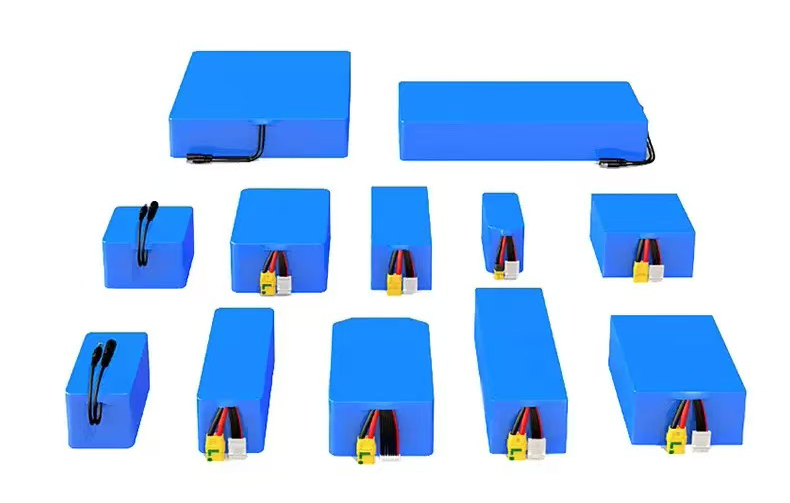
The relationship between the power density and the rate of lithium-ion batteries
Lithium-ion battery power density and C-rate are closely connected in modern battery engineering. These two performance indicators directly affect charging speed, discharge capability, thermal stability, and overall battery efficiency. In electric vehicles, renewable energy systems, industrial equipment, and portable electronics, understanding the relationship between power density and battery rate capability is essential for optimizing battery performance.
As demand for fast-charging and high-output energy systems increases, manufacturers continue improving Lithium-ion battery structures to achieve better balance between energy storage and power delivery.
Explore LNC Batteries Company specialize in advanced battery solutions, with expertise in Lithium-ion technologies, including LiFePO4, Li-ion, Li-polymer, as well as Lithium batteries like LiMnO2 and LiSOCl2, and Na-ion batteries. Quality guaranteed.
Understanding Lithium-Ion Battery Power Density
Power density refers to how quickly a Lithium-ion battery can deliver or absorb energy. It is usually expressed in watts per kilogram.
A battery with high power density can provide strong current output within a short period, making it suitable for applications requiring rapid acceleration or fast charging.
The standard calculation formula is:
Power Density (W/kg)=Battery Weight (kg)Battery Power (W)
Higher power density often improves dynamic performance, but it may also increase heat generation and internal stress during operation.
Difference Between Power Density and Energy Density
Power density and energy density are frequently confused, but they describe different battery characteristics.
Energy density measures how much total energy a battery can store, while power density measures how quickly that energy can be delivered.
A Lithium-ion battery designed for high energy density may not always achieve high power density because both properties require different material optimization strategies.
What Is Battery C-Rate
C-rate describes the charging or discharging speed of a battery relative to its total capacity.
For example, a 1C discharge rate means the battery can be fully discharged in one hour. A 2C rate means discharge occurs in half an hour.
The current calculation formula is:
Discharge Current (A)=Battery Capacity (Ah)×C-Rate
If a Lithium-ion battery has a capacity of 50Ah and operates at 2C, the discharge current becomes:
50×2=100 A
Higher C-rates enable stronger power output, but they also increase thermal load and internal resistance effects.
Relationship Between Power Density and C-Rate
Power density and C-rate are directly related because higher charge and discharge rates increase instantaneous power output.
High C-Rate Improves Power Output
When a battery operates at a higher C-rate, it delivers more current over a shorter period. Since battery power depends on voltage and current, increased current leads to higher power density.
The electrical power equation is:
Power (W)=Voltage (V)×Current (A)
This explains why high-rate Lithium-ion batteries are commonly used in electric vehicles, power tools, drones, and industrial machinery.
Internal Resistance Limits Performance
As C-rate increases, internal resistance inside the battery also generates more heat. Excessive heat can reduce efficiency, accelerate aging, and affect operational safety.
Battery engineers therefore focus on minimizing internal resistance through advanced electrode materials, separator technology, and electrolyte optimization.
Explore LNC Batteries Company specialize in advanced battery solutions, with expertise in Lithium-ion technologies, including LiFePO4, Li-ion, Li-polymer, as well as Lithium batteries like LiMnO2 and LiSOCl2, and Na-ion batteries. Quality guaranteed.
Thermal Management Becomes Critical
High-power Lithium-ion batteries require effective thermal management systems to maintain stable performance during rapid charging and high-current discharge conditions.
Temperature control directly affects cycle life, charging efficiency, and long-term battery reliability.
Factors Affecting Lithium-Ion Battery Power Density
Several design parameters influence overall battery power density and rate capability.
Electrode Material Conductivity
Electrode conductivity determines how efficiently electrons and lithium ions move inside the battery cell.
Materials with improved conductivity help reduce voltage loss during high-rate discharge operation.
Electrode Thickness
Thicker electrodes generally improve energy density but may reduce power density because ion diffusion distances become longer.
Battery manufacturers often optimize electrode thickness depending on whether the target application prioritizes energy storage or high-power performance.
Electrolyte Performance
Electrolytes influence ion transport speed and charging stability. Advanced electrolyte formulations improve battery response under high-rate operating conditions.
Improved electrolyte chemistry also enhances low-temperature performance and cycle stability.
Applications Requiring High Power Density Batteries
Many industries rely on Lithium-ion batteries with high power density and strong C-rate capability.
Electric Transportation Systems
Electric vehicles require rapid acceleration and regenerative braking performance, both of which depend heavily on high-power battery systems.
Fast-charging infrastructure also increases the demand for batteries capable of handling high charging C-rates safely.
Industrial Equipment
Industrial tools and automated equipment require stable high-current discharge performance to maintain operational efficiency during heavy-load conditions.
High power density batteries help reduce equipment downtime and improve productivity.
Renewable Energy Storage
Energy storage systems supporting renewable power grids often require rapid response capability for load balancing and grid stabilization.
Lithium-ion batteries with optimized power density help manage sudden energy fluctuations more effectively.
Explore LNC Batteries Company specialize in advanced battery solutions, with expertise in Lithium-ion technologies, including LiFePO4, Li-ion, Li-polymer, as well as Lithium batteries like LiMnO2 and LiSOCl2, and Na-ion batteries. Quality guaranteed.
Future Development of High Power Lithium-Ion Batteries
Future Lithium-ion battery development focuses on achieving better balance between power density, energy density, charging speed, and safety.
Advanced materials such as silicon anodes, solid-state electrolytes, and high-conductivity cathodes continue improving battery rate capability and overall efficiency.
At the same time, Na-ion batteries are attracting attention for large-scale energy storage applications due to their cost advantages and stable cycling characteristics.