Lithium-ion battery charge and discharge efficiency directly affects energy utilization, charging speed, cycle life, and long-term operational stability. In electric vehicles, renewable energy storage systems, industrial power equipment, and portable electronics, improving battery efficiency has become one of the main priorities for manufacturers and engineers.
Efficient charging and discharging not only reduces energy loss but also helps control heat generation, minimize battery aging, and improve overall system reliability. As Lithium-ion battery technology continues evolving, several practical methods are widely used to optimize charging and discharging performance.
Explore LNC Batteries Company specialize in advanced battery solutions, with expertise in Lithium-ion technologies, including LiFePO4, Li-ion, Li-polymer, as well as Lithium batteries like LiMnO2 and LiSOCl2, and Na-ion batteries. Quality guaranteed.
Understanding Lithium-Ion Battery Charge and Discharge Efficiency
Charge and discharge efficiency refers to the ratio between energy input and usable energy output during battery operation.
Higher efficiency means less energy is lost as heat or internal resistance during charging and discharging processes.
The energy efficiency formula is commonly expressed as:
Efficiency (%)=Charge EnergyDischarge Energy×100
Several factors influence Lithium-ion battery efficiency, including temperature, internal resistance, charging rate, material structure, and battery management systems.
Optimize Charging Current and C-Rate
Charging current has a major influence on battery efficiency and long-term stability.
Avoid Excessive Fast Charging
High C-rate charging increases internal heat generation and electrochemical stress inside battery cells.
The charging current formula is:
Charging Current (A)=Battery Capacity (Ah)×C-Rate
Although fast charging improves convenience, excessive charging rates may reduce ion diffusion efficiency and accelerate electrode degradation.
Moderate charging conditions generally help maintain stable efficiency and longer cycle life.
Use Balanced Charging Strategies
Balanced charging methods reduce voltage differences between battery cells and improve overall pack efficiency.
Uniform charging distribution also helps minimize localized overheating and internal resistance growth.
Explore LNC Batteries Company specialize in advanced battery solutions, with expertise in Lithium-ion technologies, including LiFePO4, Li-ion, Li-polymer, as well as Lithium batteries like LiMnO2 and LiSOCl2, and Na-ion batteries. Quality guaranteed.
Reduce Internal Resistance
Internal resistance is one of the primary causes of energy loss during battery operation.
Improve Electrode Conductivity
High-conductivity electrode materials help electrons move more efficiently through the battery structure.
Optimized conductive additives and electrode coatings reduce voltage loss during charging and discharging.
The voltage loss relationship can be expressed as:
Voltage Loss (V)=Current (A)×Internal Resistance (Ω)
Lower internal resistance improves energy transfer efficiency and reduces heat generation.
Optimize Electrolyte Performance
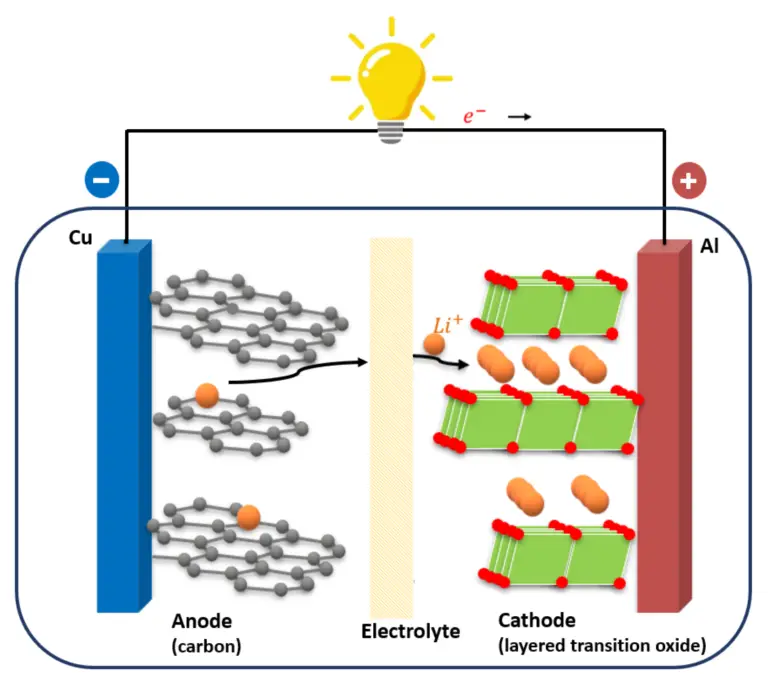
Electrolytes with higher ionic conductivity improve lithium-ion transport speed inside battery cells.
Advanced electrolyte formulations also help maintain stable performance under high-current and low-temperature conditions.
Enhance Separator Structure
Battery separators influence ion flow efficiency between electrodes.
Improved separator porosity and thermal stability help reduce diffusion resistance and improve overall operational efficiency.
Maintain Proper Operating Temperature
Temperature control plays a critical role in Lithium-ion battery charging and discharging efficiency.
Prevent Low-Temperature Performance Loss
At low temperatures, electrolyte viscosity increases and lithium-ion movement slows down.
This reduces electrochemical reaction speed and increases energy loss during charging and discharging.
Proper thermal management systems help maintain stable battery efficiency under cold environmental conditions.
Control High-Temperature Operation
Excessive temperatures accelerate electrolyte decomposition and electrode aging.
Long-term exposure to high heat may permanently reduce battery efficiency and shorten service life.
Maintaining moderate operating temperatures improves both energy utilization and long-term reliability.
Optimize Battery Management Systems
Battery management systems are essential for maintaining efficient and safe battery operation.
Accurate Voltage Monitoring
Precise voltage control prevents overcharging and overdischarging conditions that reduce battery efficiency.
Stable voltage management also helps balance battery cells during operation.
Intelligent Thermal Control
Modern battery management systems continuously monitor battery temperature and adjust operating parameters automatically.
Thermal regulation helps reduce energy loss caused by overheating or uneven temperature distribution.
Current Regulation and Protection
Smart current control prevents excessive charging and discharging stress.
This improves charging stability and helps maintain consistent energy conversion efficiency.
Explore LNC Batteries Company specialize in advanced battery solutions, with expertise in Lithium-ion technologies, including LiFePO4, Li-ion, Li-polymer, as well as Lithium batteries like LiMnO2 and LiSOCl2, and Na-ion batteries. Quality guaranteed.
Improve Battery Material Design
Advanced battery materials play a major role in improving charge and discharge efficiency.
High-Performance Cathode Materials
Improved cathode structures enhance lithium-ion diffusion speed and electrochemical stability.
Stable cathode materials help reduce polarization effects during high-current operation.
Advanced Anode Technologies
Silicon-enhanced anodes and optimized graphite structures improve energy transfer efficiency and increase battery capacity utilization.
Improved anode materials also help reduce internal resistance growth during repeated cycling.
Stable Solid Electrolyte Interphase Layer
A stable SEI layer protects the anode surface and improves long-term charging efficiency.
Controlled SEI formation reduces unwanted side reactions and improves cycle stability.
Charging and Discharging Habits That Improve Efficiency
Operational practices also influence Lithium-ion battery efficiency.
Avoid Deep Overdischarge
Extremely deep discharge cycles place additional stress on electrode materials and reduce energy conversion efficiency.
Moderate depth of discharge generally improves long-term operational stability.
Maintain Stable Charging Conditions
Consistent charging environments help reduce temperature fluctuations and internal stress inside battery cells.
Stable operating conditions improve charging consistency and energy retention performance.
Reduce Continuous High-Load Operation
Extended high-power discharge operation increases heat generation and energy loss.
Balanced load management helps improve efficiency and minimize long-term battery degradation.
Explore LNC Batteries Company specialize in advanced battery solutions, with expertise in Lithium-ion technologies, including LiFePO4, Li-ion, Li-polymer, as well as Lithium batteries like LiMnO2 and LiSOCl2, and Na-ion batteries. Quality guaranteed.
Future Trends in Lithium-Ion Battery Efficiency Improvement
Future Lithium-ion battery development focuses on achieving higher charging efficiency, faster charging speed, and lower energy loss.
Solid-state batteries, advanced electrolyte systems, silicon anodes, and intelligent battery management technologies are expected to significantly improve future battery performance.
At the same time, Na-ion batteries are gaining attention for large-scale energy storage applications due to their stable cycling behavior and resource availability.