Lithium-Ion Battery Shallow Charging and Discharging: The Real-World Guide to Making Your Cells Last
Everyone talks about keeping your battery between 20% and 80%. Almost nobody explains why it actually works, or what happens when you ignore it. So here is the deal: shallow charging and shallow discharging is not some mysterious battery hack. It is basic electrochemistry — and once you understand the mechanism, the rules start making perfect sense.
The short version: every time you push a lithium-ion cell to its voltage extremes, you cause tiny but permanent damage. Do it a thousand times, and that damage adds up fast. Stay in the middle, and you slow the whole process down dramatically.
What Actually Happens Inside the Cell at Full Charge and Full Discharge
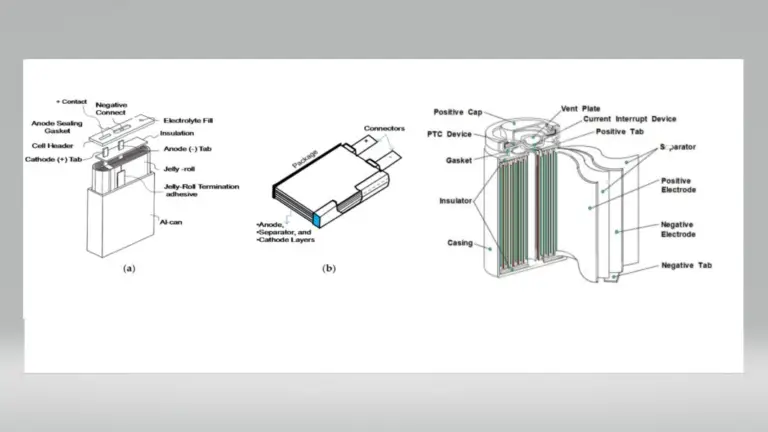
When you charge a lithium-ion cell to 100%, the cathode is packed with lithium ions. The anode is nearly empty. This is a high-stress state. The cathode crystal lattice is stretched to its limit. The SEI layer on the anode is thin and fragile. Any additional lithium forced in does not store cleanly — it plates as metallic lithium on the anode surface instead. That plating is irreversible. It does not participate in cycling. It just sits there, taking up space and growing dendrites over time.
Flip to the other end. At 0% SOC, the anode is stuffed with lithium and the cathode is stripped bare. The copper current collector starts to dissolve. The graphite structure can partially collapse. The electrolyte near the anode gets reduced into gunk that clogs the pores. None of this is dramatic in one cycle. But cycle after cycle, these micro-damages accumulate.
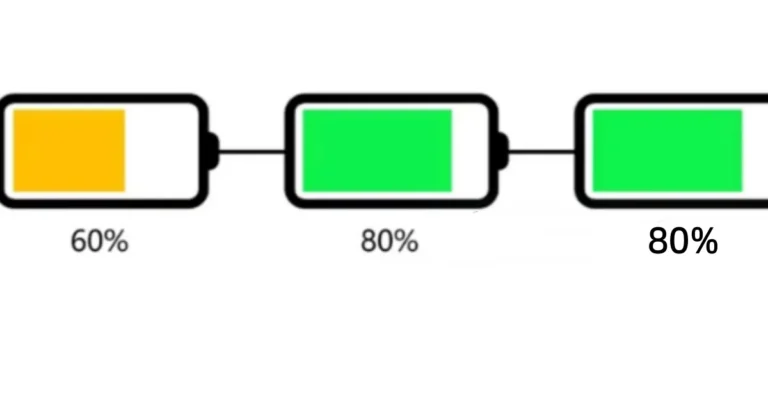
The middle range — roughly 20% to 80% SOC — avoids both extremes. The cathode is not over-stuffed. The anode is not over-empty. The SEI layer stays stable. The current collectors stay intact. You are not eliminating degradation entirely, but you are cutting the rate roughly in half compared to full cycling.
The Practical Rules That Actually Extend Battery Life
Stop Charging at 80% (or 90% if You Need the Range)
The last 20% of charge is where the most damage happens. Voltage climbs steeply from 4.0V to 4.2V on an NMC cell, and that steep climb is not free energy — it is stress. Every minute the cell sits at 4.2V, the cathode is under tension. If you can live with 80% charge on a daily basis, do it. Your cells will thank you after two or three years.
Now, if you need the full range for a long trip, charge to 100% occasionally. That is fine. The problem is doing it every single night. Occasional full charge is not the enemy. Habitual full charge is.
Don’t Let It Drop Below 20%
Discharging below 20% SOC causes copper dissolution from the anode current collector. This is not reversible. Once that copper is gone, it is gone. It migrates to the cathode and creates internal shorts over time. You will not notice it immediately. But after a few hundred deep-discharge cycles, capacity drops faster than expected, and the cell heats up more under load.
A good rule of thumb: if your device warns you at 20%, that warning exists for a reason. Treat it as a hard floor, not a suggestion.
Keep the Current Low Whenever Possible
Shallow cycling means nothing if you do it at 3C. High current causes lithium plating during charging and excessive heat during discharging. Both accelerate every degradation mechanism you are trying to avoid. Slow charging overnight at 0.3C or 0.5C is far gentler than a 45-minute fast charge, even if both end at 80% SOC.
The same applies to discharging. Gentle loads keep the voltage in the plateau region, where polarization is low and the cell runs cool. Hard pulls drag the voltage down fast, which tricks the BMS into thinking the battery is empty when it is not — and that leads to more deep cycling than you intended.
Why Shallow Cycling Beats Deep Cycling (The Data Is Clear)
There is a common myth that you should occasionally run a full discharge to “calibrate” the battery. That advice came from the nickel-cadmium era, where memory effect was real. Lithium-ion does not have memory effect. Full discharges do not recalibrate anything — they just add wear.
Research on cycle life confirms this. Cells cycled between 20% and 80% SOC consistently outlast cells cycled from 0% to 100% by a factor of two to four, depending on chemistry and temperature. LFP cells show the biggest gap because their flat voltage curve already makes deep cycling unnecessary. NMC cells benefit even more because their cathode structure degrades faster under full-range stress.
The numbers are not theoretical. Fleet operators who enforce shallow cycling in their vehicles report pack SOH staying above 90% after thousands of cycles. Operators who let drivers drain to zero and charge to full see the same packs hit 80% SOH in half the time.
Temperature Matters More Than Most People Think
Shallow cycling helps, but it does not save you from heat. A cell cycled between 20% and 80% at 45°C will still degrade fast. Temperature is the single biggest accelerator of every bad reaction inside the cell — SEI growth, electrolyte decomposition, cathode cracking, lithium plating.
The sweet spot is 15°C to 35°C. Below 15°C, internal resistance climbs and you get voltage sag that makes the BMS think the battery is emptier than it really is. Above 35°C, degradation rate roughly doubles for every ten-degree increase.
If you live in a hot climate, shallow cycling alone is not enough. You need active cooling or at least shade and airflow. If you are charging in a hot car, move it indoors. That 45°C surface temperature is cooking the cell from the inside.
How to Build a Shallow Cycling Habit Without Losing Your Mind
The hardest part is not knowing the rules. It is actually following them when convenience pushes you the other way.
Set your device to stop charging at 80% if it has that option. Most modern phones and laptops have this buried in settings somewhere. Enable it and forget it.
If you use an electric vehicle, set the daily charge limit to 80% for commuting. Use the full charge only before long trips. This alone can add years to the pack.
For devices without a software limit, use a timer or a smart plug to cut power after the estimated 80% point. It is not elegant, but it works.
Do not obsess over it. One full charge per week will not destroy your battery. The goal is to make shallow cycling the default, not the exception. Habits compound. A cell that spends 90% of its life between 20% and 80% will outlast one that spends 90% of its life between 5% and 100% — and the difference shows up clearly after the first year.