
Lithium-Ion Battery Consistency Screening Standards: What Actually Matters When You Sort Cells
No two lithium-ion cells leave the factory exactly alike. That is not a defect — it is physics. Raw material variations, coating thickness differences, electrolyte filling tolerances, and dozens of other micro-factors ensure that even cells from the same batch will drift apart over time. The real question is not whether they differ, but whether those differences stay small enough to keep the pack alive.
Consistency screening is the gatekeeper. Get it wrong, and your battery pack ages unevenly, loses capacity fast, and in the worst case, becomes a safety liability. Get it right, and you squeeze every last cycle out of every cell in the pack.
What Consistency Actually Means in Practice
Consistency is not a single number. It is a moving target across multiple parameters, measured at multiple points in a cell’s life.
At the most basic level, it means that every cell in a pack should have nearly identical voltage, capacity, internal resistance, self-discharge rate, and temperature response when new. But the definition deepens once you add time. A pack that starts consistent can still fall apart if one cell ages faster than the rest. So real consistency screening must account for how capacity fades, how resistance grows, and how quickly each cell degrades relative to its neighbors.
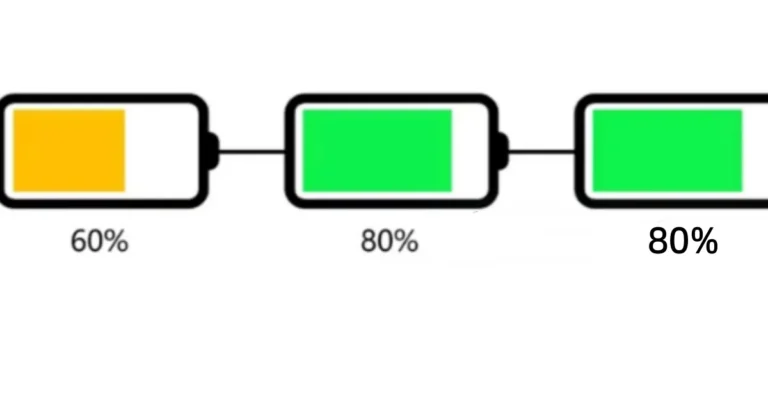
Research shows that open-circuit voltage across a group of cells follows a normal distribution. That means you can never eliminate variation entirely — you can only tighten the spread. The goal is to get every cell inside a narrow enough band that the pack behaves as one unit, not as a collection of individuals pulling in different directions.
The Four Parameters That Define Screening
Capacity is the heaviest hitter. It is almost always the first filter in any sorting line. Two cells rated at the same milliamp-hour can easily differ by five to ten percent straight off the line, and that gap only widens with cycling. Capacity is also the parameter most tied to lifetime — a cell with less usable capacity today will hit end-of-life sooner.
Internal resistance matters because it governs power delivery and heat generation. A cell with higher resistance runs hotter under the same load, which accelerates its own degradation and drags down the cells around it. Resistance also shifts during discharge, which makes accurate measurement tricky — you need the right test protocol or you get garbage data.
Open-circuit voltage tells you where a cell sits on the state-of-charge curve at rest. After a full charge and a long rest, cells with the same SOC should show nearly identical voltage. The gap between the highest and lowest cell in a pack — the voltage spread — is what most BMS systems watch most closely. Keep that spread tight, and you keep the pack balanced.
Self-discharge rate is the quiet killer. A cell that loses two percent of its charge per month while sitting on the shelf will slowly fall behind its neighbors. Over months of storage, that small leak becomes a large imbalance. Measuring self-discharge requires patience — you charge the cell, let it rest for days or weeks, then measure how much it lost.
Static Screening Methods: The Workhorses of the Factory Floor
Static screening means you measure cells at rest, without any load applied. It is fast, it is cheap, and it catches the biggest offenders.
Single-Parameter Sorting
The simplest approach picks one variable and groups cells that fall inside the same range.
Voltage sorting is the easiest to implement. You charge every cell to full, let it rest, and bin them by open-circuit voltage. The problem? Voltage alone tells you almost nothing about how the cell will behave under load. Two cells with identical voltage can have wildly different capacity or resistance.
Capacity sorting uses a controlled charge-discharge cycle at a fixed current, then calculates milliamp-hours from the discharge time. It is more informative than voltage alone, but still limited — it only reflects performance under one specific condition. A cell that looks great at 0.5C might fall apart at 2C.
Resistance sorting is fast and useful for catching outliers, but resistance changes during discharge, so a single snapshot measurement can mislead you. It works best as a secondary filter after capacity sorting, not as a standalone method.
Multi-Parameter Sorting
Smart factories do not rely on one number. They layer filters. First, sort by capacity into coarse bins. Then, within each bin, sort again by resistance. Then check voltage. The result is a matrix of groups — maybe fifteen or twenty distinct bins from a single production lot. Cells pulled from the same bin go into the same pack.
This approach dramatically improves initial consistency. But it still misses something critical: how the cell actually behaves while working. That is where dynamic screening takes over.
Dynamic Screening: Testing Cells the Way They Actually Perform
Static numbers are a starting point, not a finish line. A cell that looks perfect on paper can still underperform when current flows. Dynamic screening forces cells through realistic operating conditions and watches how they respond.
Charge-Discharge Curve Matching
Instead of looking at a single data point, you record the entire voltage-vs-time curve during a controlled charge or discharge. Then you compare curves using statistical clustering algorithms. Cells whose curves overlap closely — same slope, same plateau length, same knee shape — get grouped together.
This method catches problems that static tests miss entirely. Two cells with identical capacity can have completely different voltage plateaus, which means their BMS will read them differently and manage them poorly. Curve matching exposes that mismatch.
The downside is data volume. You are collecting thousands of data points per cell, and you need software to process them. Pair this with the right clustering algorithm, and you get groups that actually behave the same way under load.
Electrochemical Impedance Spectroscopy
EIS takes dynamic screening a step further by probing the cell’s internal chemistry. You sweep a range of frequencies and measure impedance across the spectrum. The resulting Nyquist plot reveals charge-transfer resistance, SEI layer thickness, and diffusion behavior — all hidden from a simple voltage or capacity test.
Recent work has shown that the real-axis intercept of the impedance spectrum at zero imaginary impedance correlates strongly with cycle life. This makes EIS not just a screening tool but a predictor of how long a cell will last. The catch is that EIS equipment is expensive and the test takes longer than a simple capacity check, so it tends to show up in high-end production lines rather than commodity manufacturing.
Pulse Current Testing
Standard charge-discharge tests use steady current. Real-world applications do not. Electric vehicles see constant current spikes during acceleration, regenerative braking, and fast charging. Pulse current screening adds these spikes to the test protocol and measures how each cell’s voltage responds.
Cells that handle pulse current well have low polarization and stable internal structure. Cells that sag or spike under pulse load will cause imbalance in an actual pack. This method is still emerging in production, but it is gaining traction because it mirrors real usage more closely than anything else.
How to Judge Whether Your Screening Actually Works
You need metrics, not gut feelings.
Standard deviation is the most common statistical tool. You calculate the SD of capacity, resistance, or voltage across a group of cells. Lower SD means tighter consistency. It is mathematically sound and easy to compute, which is why most factories use it as their primary quality gate.
Range (max minus min) is even simpler. It does not capture the full distribution, but for BMS control logic, it is often enough. If the voltage spread across a pack stays under a defined threshold, the BMS can keep things balanced. Many production lines use range as a quick pass-or-fail check before moving to more detailed analysis.
Capacity correlation coefficient is a newer metric that has shown strong results in separating good cells from bad ones. It compares each cell’s capacity to a reference value and calculates a correlation score. The closer the score is to one, the more consistent the cell is with the group. Unlike raw capacity numbers, this method accounts for the natural spread in the batch and gives you an objective consistency grade.
The Three Pillars That Keep Consistency Alive After Screening
Screening at the factory is only half the battle. Even perfectly matched cells will drift apart over hundreds of cycles. That is why three systems work together to hold consistency in place.
Thermal management keeps every cell at the same temperature. Since degradation rate roughly doubles for every ten degrees Celsius of temperature rise, a hot cell in the corner of a pack will age twice as fast as a cool cell in the center. Uniform cooling — through liquid plates, cold plates, or forced air — is not optional for any serious pack design.
BMS balancing corrects drift in real time. Passive balancing bleeds off excess charge from higher-voltage cells through resistors. Active balancing shuttles energy from high cells to low cells using capacitors, inductors, or DC-DC converters. Active balancing is more efficient and is becoming the standard for packs where every percentage point of capacity matters.
Ongoing monitoring catches problems before they cascade. Modern BMS chips can measure every cell’s voltage in under 2.5 milliseconds with total error under 1.2 millivolts. That resolution lets the system detect a drifting cell months before it becomes a failure. The key is pairing high-precision measurement with cloud-based algorithms that track consistency trends over the full life of the pack.