How to Extend Lithium-Ion Battery Cycle Life: Proven Methods Backed by Science
Lithium-ion batteries die slowly. Every charge cycle chips away at the active lithium inventory, thickens the SEI layer, and climbs the internal resistance curve. Most cells sold today are rated for 500 to 2,000 full cycles before capacity drops below 80%. But what if you could push that number tenfold — or more?
The answer is not one magic trick. It is a stack of interlocking strategies — from how you charge, to how you store, to breakthrough molecular interventions that did not exist five years ago. Here is what the research actually says about squeezing more life out of every cell.
Charge Smarter, Not Harder
The single biggest lever you control is your charging behavior. Most users treat batteries like fuel tanks — drain it, fill it, repeat. That is exactly the wrong approach for lithium chemistry.
Stay in the 20% to 80% Sweet Spot
Every time you push a cell to 100% or drain it below 10%, you accelerate irreversible damage. Research shows that keeping state of charge between 20% and 80% can cut annual capacity fade from 8% down to just 3%. For electric vehicles, Tesla Model 3 owners who maintained this range reported only 8% degradation after five years — well below the industry average of 15%.
The reason is voltage stress. Above 4.2V per cell, the cathode structure experiences lattice strain. Below 3.0V, lithium plating risk spikes. Both are silent killers. Modern phone operating systems already include “optimized charging” features that hold the charge at 80% and delay the final top-off until you need it. Use them.
Ditch the Fast-Charge Addiction
DC fast charging is convenient but brutal. Battery temperatures can climb past 45°C during a rapid session, and every 10°C rise roughly doubles the degradation rate. Real-world data from EV fleets shows that vehicles relying heavily on fast charging lose capacity 30% faster than those charged primarily on AC slow charge.
Use fast charging only when necessary. When you do, pick cool environments — a garage, not a sun-baked parking lot. And never fast charge below 20% SOC; the combination of high current and low voltage is the worst-case scenario for lithium plating.
Shallow Cycles Beat Deep Ones Every Time
A cycle from 100% to 20% (80% depth of discharge) gives you roughly 800 cycles. The same chemistry cycled only from 50% to 20% (30% depth) can deliver over 1,200 cycles. The math is simple: shallower swings mean less mechanical stress on electrode materials, slower SEI growth, and far less heat generation per cycle.
Charge at 50%, not at 5%. Your battery will thank you for years.
Temperature Is the Silent Killer
If charging habits are the lever you pull, temperature is the invisible hand that decides how fast things fall apart.
The 20°C to 25°C Goldilocks Zone
Lithium-ion cells are happiest between 20°C and 25°C. Above 45°C, electrolyte decomposition accelerates and cathode corrosion kicks in. Sustained exposure to 40°C can triple your annual capacity fade — from 5% to 15%. Below 0°C, lithium-ion mobility drops sharply, and charging can trigger lithium dendrite growth, which is a direct path to internal short circuits.
For EVs parked in unheated garages over winter, one study recorded 5% capacity loss in a single month. The same cars stored in heated garages lost only 1%. The message is clear: treat temperature control as seriously as you treat charging.
Avoid Heat During Charging
Charging generates heat. Fast charging generates more. If you stack a high-current charge on top of an already hot environment — say, a phone under a thick case in direct sunlight — you are cooking the cell from the inside. Battery temperatures during gaming-while-charging sessions have been measured above 52°C, with degradation rates four times normal.
Strip the case while charging. Use a cool surface. Let the phone breathe.
Cutting-Edge Science That Rewrites the Rules
Beyond daily habits, researchers have developed interventions that target the root cause of death: loss of active lithium.
The “Injection” Breakthrough: CF3SO2Li
In early 2025, a Fudan University team published results in Nature that stunned the battery community. Using AI-driven molecular design, they discovered a lithium carrier molecule — lithium trifluoromethanesulfinate (CF3SO2Li) — that can be injected into degraded cells like a medical infusion.
The molecule slowly releases lithium ions into the electrolyte, replenishing the active lithium pool that gets consumed by SEI formation and side reactions over time. Cells treated this way retained 96% of their original capacity after tens of thousands of cycles. Cycle life jumped from the typical 500–2,000 range to 12,000–60,000 cycles. For grid storage running two cycles per day, that translates to roughly 100 years of service.
What makes this remarkable is the delivery method: no disassembly, no electrode replacement, just inject the molecule into the existing electrolyte and seal it back up. The technology is still moving from lab to production, but it represents the first real path to making lithium-ion batteries truly circular.
The “Discharge and Wait” Trick
Stanford researchers found something even simpler. Fully discharge a lithium-metal cell, then let it sit for just one hour. During that rest period, the SEI matrix around isolated “dead lithium” fragments dissolves, and the lithium reconnects to the anode. Capacity recovers. Cycle life extends.
The beauty of this method is that it requires zero new hardware. It is a software update to the battery management system — reprogram the BMS to allow a module to fully discharge and idle, and you get a free life extension. No cost, no new materials, no manufacturing changes.
Chemical Short-Range Disorder in Cathodes
A team from Delft University of Technology, collaborating with Chinese researchers, introduced chemical short-range disorder (CSRD) into layered oxide cathodes. By precisely tuning how lithium and cobalt atoms distribute across the lattice — about 2.6% of cobalt ions sit in lithium layers — they eliminated the lattice stress that normally cracks the cathode during deep charging. The result: significantly longer cycle life and better fast-charge tolerance, published in Nature.
Storage and Long-Term Care
Even a perfectly charged battery will die if you store it wrong.
Keep It at 50% SOC, Not 100%
Storing a cell at full charge keeps it at high voltage, which accelerates electrolyte oxidation. Storing it empty risks copper dissolution from the anode current collector. The sweet spot is 40% to 60% state of charge. For long-term storage beyond a week, aim for exactly 50% — it minimizes self-discharge stress and keeps the cell chemistry stable.
Control the Environment
Ideal storage temperature: 15°C to 25°C. Humidity should stay below 50%. Every six months, run a partial charge-discharge cycle to keep the BMS calibration accurate. If a cell sits untouched for over a year, its capacity may have drifted so far that the BMS misreads the actual state — a quick full cycle recalibration fixes this.
Equalization Charging for Battery Packs
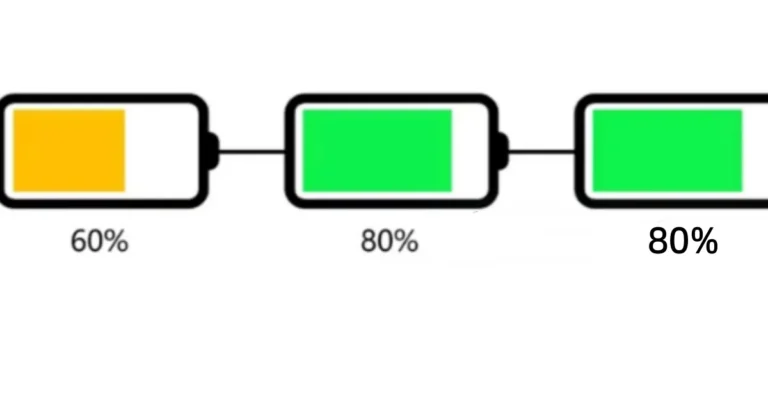
In multi-cell packs, individual cells drift apart over time. The weakest cell dictates the pack’s usable capacity — the “barrel effect.” Running an equalization charge (a slow top-off after the pack reaches full) every three months rebalances the cells and can reduce pack-level degradation by 15%. Most modern BMS units support this natively; check your vehicle or device manual.
What Actually Kills Cycle Life — And What Does Not
Not everything you have heard is true. Let us kill the myths.
Myth: You must fully discharge a new battery three times to activate it. False. Modern cells ship pre-activated from the factory. Forcing deep discharge on a new cell only adds unnecessary wear.
Myth: Leaving your phone plugged in overnight destroys the battery. Partially true — but only if the phone lacks optimized charging. With modern BMS, the risk is minimal. Still, unplugging at 80% is better for long-term health.
Myth: Fast charging ruins batteries. Not inherently. Fast charge itself is fine at moderate temperatures and above 20% SOC. The damage comes from frequent fast charging in hot conditions, not the technology itself.
Myth: Batteries need a “memory” like old NiCd cells. They do not. Lithium-ion has no memory effect. Shallow, frequent charging is actually gentler than deep cycles.
The real enemies are simple: high voltage, high temperature, deep discharge, and time. Everything else is noise.