Liquid Lithium-ion vs Li-polymer Battery: Key Differences & Which to Choose
Liquid Lithium-ion vs Li-polymer Batteries: What’s the Difference?
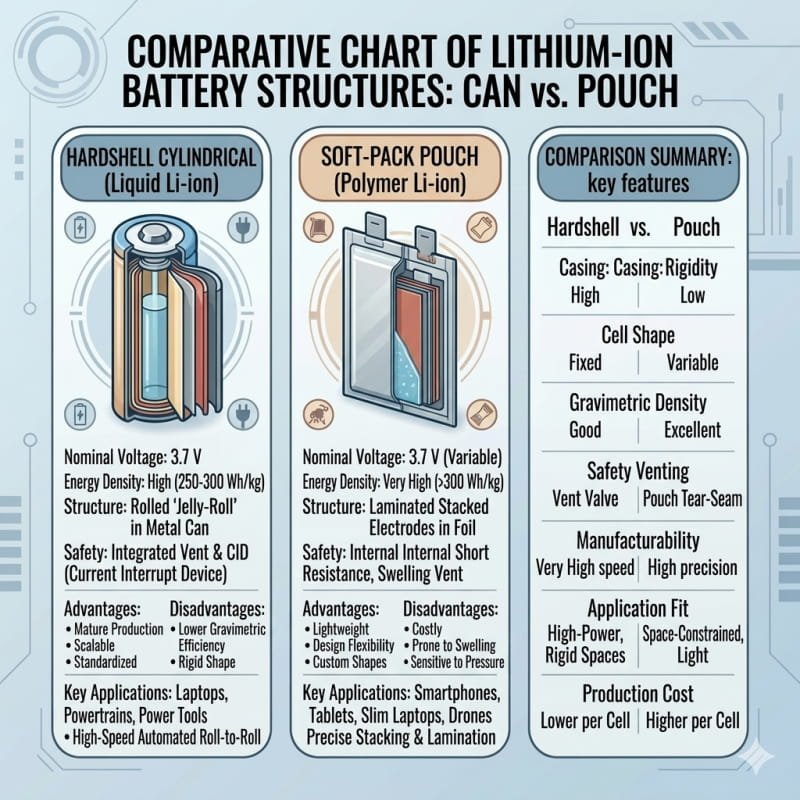
Lithium-ion batteries can be divided into two main categories based on their electrolyte material: liquid lithium-ion batteries (LIB) and lithium polymer batteries (Li-polymer, LIP). While they share the same positive/negative materials and working principles, their electrolytes create key differences in performance, safety, and application.
### 1. Liquid Lithium-ion Batteries (LIB)
Liquid lithium-ion batteries are the traditional and most common type of lithium-ion battery. They use a **liquid organic electrolyte** as the medium for Li⁺ ion movement.
- – **Features**: Mature technology, high ionic conductivity, low cost, and wide application range.
- – **Applications**: Smartphones, laptops, electric vehicles, power tools, and most consumer electronics.
### 2. Lithium Polymer Batteries (Li-polymer, LIP)
Li-polymer batteries use a **solid or gel polymer electrolyte** instead of liquid electrolyte. They are a high-tech, next-generation rechargeable lithium-ion battery, with lithium cobalt oxide as the positive electrode, carbon as the negative electrode, and aluminum-plastic film as the outer packaging.
Li-polymer batteries are further divided into three subtypes:
- – **Solid Polymer Electrolyte Batteries**: The electrolyte is a mixture of polymer and salt, with low ionic conductivity at room temperature, suitable for high-temperature use.
- – **Gel Polymer Electrolyte Batteries**: Plasticizers are added to the solid polymer electrolyte to improve ionic conductivity, enabling normal use at room temperature (the most common type of Li-polymer battery).
- – **Polymer Positive Electrode Batteries**: Use conductive polymer as the positive electrode material, offering higher specific capacity and better performance.
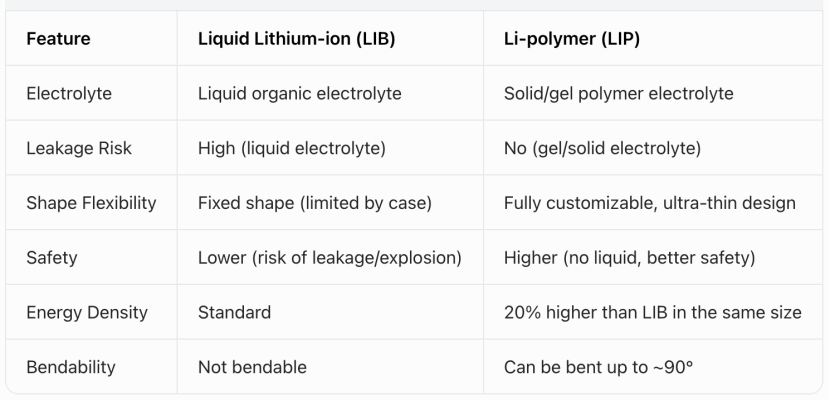
### Key Differences Between LIB and Li-polymer Batteries
### Which One Should You Choose?
- – **Liquid LIB**: For cost-sensitive, high-volume applications where shape is fixed.
- – **Li-polymer**: For thin, flexible, custom-shaped devices, or applications requiring high safety and energy density.


