Why Lithium-Ion Batteries Lose Capacity in the Cold: The Real Reasons Nobody Explains Well
Your phone dies faster in January. Your electric car loses 30 to 40 percent of its range when the temperature drops below freezing. This is not a glitch. It is chemistry. And the reasons go deeper than most people think.
Lithium-ion batteries are amazing at room temperature. But the moment the mercury falls, everything inside the cell starts fighting against you. The electrolyte thickens. The ions slow down. The electrodes resist. And the battery delivers less capacity than it actually has.
This is not a software problem. You cannot fix it with a firmware update. The capacity loss at low temperature is built into the physics of how these batteries work.
The Electrolyte Is the First Thing to Fail
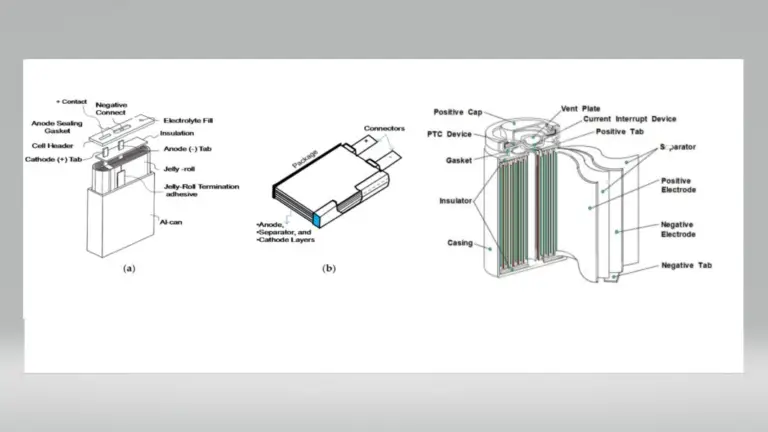
The electrolyte is the blood of a lithium-ion battery. It carries lithium ions between the positive and negative electrodes. When it gets cold, it stops flowing properly.
Viscosity Kills Ion Transport
At low temperatures, the organic solvents in the electrolyte become thick. Think of honey in a refrigerator. That is what happens to your battery’s electrolyte when the temperature drops below 10 degrees Celsius.
The lithium ions still need to move from one electrode to the other. But the thicker electrolyte resists their movement. Ion conductivity drops sharply. At minus 20 degrees Celsius, the conductivity can fall to less than half of what it is at room temperature.
This means the battery cannot deliver current as fast as it should. The voltage sags under load. The usable capacity shrinks. And the battery management system may cut power early to protect the cell, even though there is still energy left inside.
Lithium Salt Solubility Drops
It is not just the solvent. The lithium salt, usually LiPF6, also becomes less soluble in cold electrolyte. Fewer dissolved ions mean fewer charge carriers. The electrolyte’s ability to conduct electricity drops even further.
This is a double hit. Thicker solvent plus fewer dissolved ions equals a dramatic reduction in ionic conductivity. The battery essentially chokes on its own chemistry.
The Electrodes Stop Cooperating
The electrolyte problem is bad enough. But the electrodes make it worse.
Charge Transfer Resistance Spikes
At the interface between the electrode and the electrolyte, lithium ions must transfer from the liquid phase into the solid electrode material. This process requires energy. At low temperatures, that energy barrier gets higher.
The result is a massive increase in charge transfer resistance, often called Rct. This resistance shows up as voltage drop during discharge. The battery reads a lower voltage than it should, so the system thinks the battery is empty when it is not.
Research on LiFePO4 cells shows that charge transfer resistance can increase by several times when the temperature drops from 25 degrees to minus 20 degrees. The same pattern holds for NMC and other cathode chemistries, though the severity varies.
Lithium Diffusion Inside the Electrode Slows Down
Even if the ions reach the electrode surface, they still need to diffuse into the bulk of the active material. This solid-state diffusion is already slow at room temperature. At low temperatures, it becomes painfully slow.
The diffusion coefficient of lithium in graphite anode can drop by an order of magnitude at minus 10 degrees compared to room temperature. In LiFePO4 cathode, the drop is even more severe because the material is already a poor electronic conductor. The ions get stuck near the surface. The interior of the particle stays unused.
This is why the capacity loss at low temperature is not linear. It accelerates as the temperature drops. Between 0 and minus 10 degrees, you might lose 10 to 15 percent of capacity. Between minus 10 and minus 20, you can lose another 15 to 20 percent. The curve steepens because diffusion gets exponentially harder as temperature falls.
The SEI Layer Becomes a Wall
The solid electrolyte interphase, or SEI, is a thin film that forms on the anode surface during the first few charge cycles. It is supposed to protect the anode while still letting lithium ions pass through. At low temperature, it stops doing its job properly.
SEI Impedance Grows in the Cold
The SEI layer’s resistance to ion transport increases dramatically at low temperatures. Lithium ions struggle to cross it. This adds another voltage drop on top of the charge transfer resistance and the diffusion resistance.
Some researchers argue that SEI impedance is actually the dominant resistance at low temperature, even more than charge transfer resistance. The ions can reach the electrode surface. They can even start to transfer. But they cannot get through the SEI fast enough. The bottleneck shifts from the electrode to the interface.
Lithium Plating Makes the SEI Thicker
Here is where things get dangerous. When you charge a lithium-ion battery in the cold, the anode cannot absorb lithium ions fast enough. The ions pile up at the surface instead of intercalating into the graphite. They turn into metallic lithium.
This is called lithium plating. And it is irreversible. The plated lithium reacts with the electrolyte, forming more SEI. The SEI gets thicker. The impedance gets higher. The next time you charge, the problem is worse.
This is why charging a cold battery is one of the worst things you can do. It does not just reduce capacity for that cycle. It degrades the battery permanently. Every cold charge cycle leaves behind a little more metallic lithium and a little more dead SEI.
The Separator Does Not Help
The separator between the anode and cathode is usually a thin polymer membrane. At low temperatures, it becomes stiffer. Its pores shrink slightly. Ion transport through the separator slows down.
This effect is smaller than the electrolyte and electrode problems. But it adds up. Every component in the cell gets worse at low temperature. None of them are immune.
Why Different Chemistries Behave Differently
Not all lithium-ion batteries suffer equally in the cold.
NMC Handles Cold Better Than LFP
NMC chemistries, especially those with higher nickel content, tend to retain more capacity at low temperature than LiFePO4. The reason is simple: LiFePO4 is an electronic insulator. Its already-poor conductivity gets even worse in the cold. The internal resistance spikes. The voltage drops fast.
NMC materials have better electronic conductivity. Their charge transfer resistance increases less at low temperature. So they deliver more usable capacity when it is cold.
This is why electric vehicles with NMC batteries tend to lose less range in winter than those with LFP batteries. The chemistry matters. A lot.
Graphite Anode Is the Weak Link
Regardless of the cathode, the graphite anode is usually the limiting factor at low temperature. The diffusion of lithium into graphite slows down more than the diffusion into most cathode materials. The anode polarization dominates the total cell polarization.
This is why researchers focus so much on anode improvements for cold-weather performance. Better anode materials, thinner electrodes, and optimized particle sizes all help. But the fundamental limitation of graphite in the cold remains.
The Numbers Tell the Story
At 0 degrees Celsius, most lithium-ion batteries retain about 80 percent of their room-temperature capacity. At minus 10 degrees, that drops to around 70 percent. At minus 20 degrees, you are looking at 50 to 65 percent depending on the chemistry.
For LiFePO4 specifically, the drop is steeper. At minus 20 degrees, capacity can fall to around 35 percent of the room-temperature value. Some studies show coulombic efficiency dropping from nearly 100 percent at 25 degrees to below 65 percent at minus 20 degrees.
These numbers are not theoretical. They come from real cell testing across the minus 20 to plus 55 degree range. And they explain why winter range anxiety is not just a feeling. It is math.
What Actually Happens When You Discharge a Cold Battery
When you pull power from a cold battery, the voltage drops faster than expected. The battery management system sees this low voltage and thinks the battery is nearly empty. It cuts power or limits output to protect the cell.
But the energy is still there. It is just locked inside because the ions cannot move fast enough to deliver it. The capacity is not gone. It is inaccessible. This is why a cold battery often recovers its full capacity after warming up. The damage is mostly reversible, as long as you did not charge it while cold.
The irreversible damage comes from lithium plating during cold charging. That is the one thing that permanently reduces capacity over time. Everything else is temporary.
The Bottom Line on Cold Capacity Loss
Low-temperature capacity fade is not one problem. It is four problems stacked on top of each other. Thicker electrolyte. Slower diffusion. Higher resistance at every interface. And lithium plating if you charge while cold.
No single fix solves all of them. Better electrolytes help with the first two. Thinner electrodes help with diffusion. Thermal management keeps the cell warm enough to avoid plating. But the physics does not change. Lithium-ion batteries will always perform worse in the cold. The question is how much worse, and whether you can live with it.